
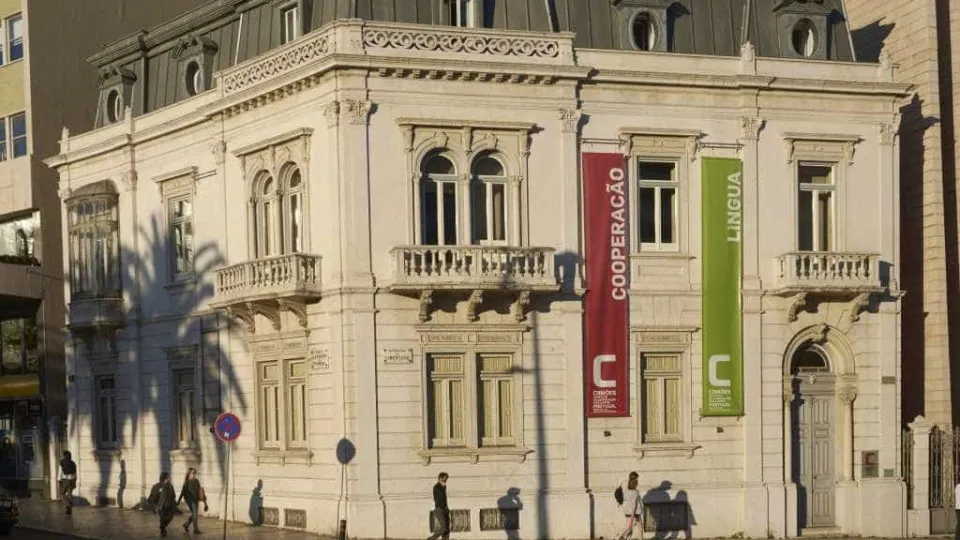
Foreign Minister Paulo Rangel announced that he intends to restructure the Camões Institute, which represents 20% of the Ministry’s budget.
© Camões Institute
29/10/2026
by
Lusa
O minister of Foreign Affairs, Paulo Rangel, announced today that he intends to restructure the Camões Institute, which represents about 20% of the Ministry's budget, and praised the reform achieved in the Legal System of Portuguese Teaching in Foreign.
During his regimental hearing in the context of the discussion of the State Budget of 2027, the head of Portuguese diplomacy stressed that the new Legal Regime of Portuguese Teaching in Foreign, reached this year with the representative unions of teachers and readers, is not yet reflected in the budget for 2027, which will happen during its execution.
In addition, Rangel accused MPs of lying over months on the subject: “I wanted to say to Members here that it was really with great suffering that I, over months, heard Members of this House say the most extraordinary things, all false, about the legal regime of Portuguese Teaching in Foreign.”.
“ Interestingly, not only have we reached an agreement, but all trade unions have signed this agreement without exception. So, where are the voices of the catastrophe?”, he questioned.
Rangel praised the conquest, since, for example, the remuneration tables have not been updated since 2009.
On the other hand, he said that the orientation of his ministry “for the defense of Portuguese language and culture” is very important.
So, he added, the Camões Institute will be budgeted at EUR 109 million.
“This is basically 20% of what the Ministry of Foreign Affairs budget is,” he said.
In addition, he said that he intended in 2027 to restructure the Camões Institute, which, in his view, “has some limitations” and needs to “follow the state reform movement”.
According to Rangel, the institute “needs a large investment from a digital point of view and its ability to act” and “needs to better merge language policy with cultural policy”.
This is the third budget presented by a Government of the AD coalition, which, according to the head of Portuguese diplomacy, appears in an “international context that has been worsening and deteriorating”.
“And so this is a stability budget. It is a stability budget in the right accounts and in the fair accounts, stability in budgetary responsibility, that is, in reducing public debt, in ensuring that there is a budgetary surplus,” he said.