
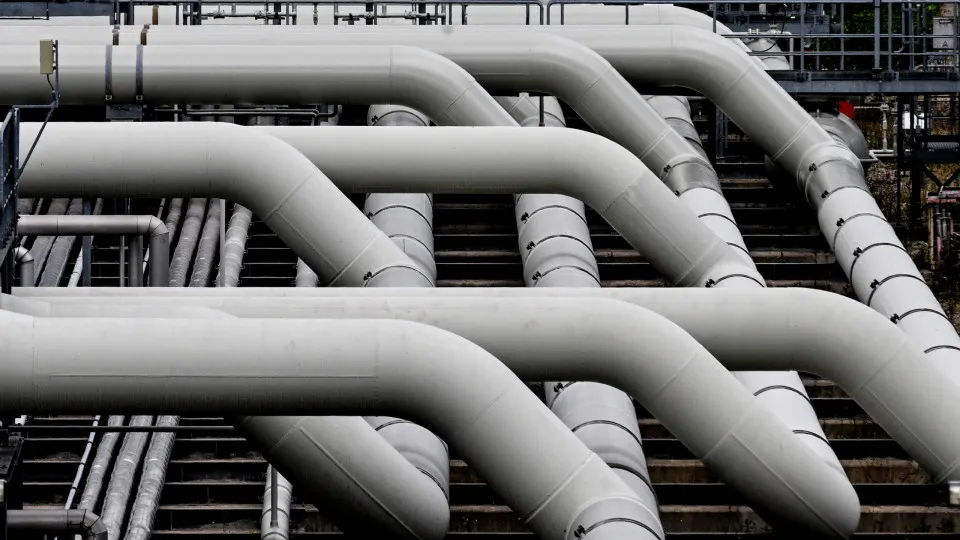
Mozambique advances with the project of the LNG terminal in Matola as an alternative to the decline in gas production of Pande and Temane, which is expected to end in 2030.
© Lusa
05/11/2026
by
Lusa
Moçambique prepares an alternative to the gas of Pande and Temane, whose production should end in 2030, advancing with the project of the Liquefied Natural Gas terminal (LNG) in Matola, predicting to reach the financial closure by the end of 2027.
Beluluane Gas Company (BGC) today announced the appointment of the VGI/PRDW consortium as Engineer of the Owner of the future terminal, at a stage that should allow the consolidation of engineering projects and support the hiring of the contractor responsible for building the infrastructure.
According to a company statement, the consortium will “consolidate all engineering projects and provide support” in the completion of the hiring process of EPC contractor (Engineering, Acquisition and Construction).
BGC affirms this step will allow the project to be financially closed before the end of 2027, ensuring that the initial funding will be provided by Matola Gas Company (MGC) and Gigajoule International (GI).
Beluluane Gas Company is a public limited company registered in Mozambique, established in 2016 by South African company Gigajoule and French multinational TotalEnergies to develop a project to import LNG through the port of Matola, around Maputo.
Today's communiqué adds that the operation of the terminal before exhausting the gas supply of Pande and Temane is considered crucial to ensure the supply of the gas power plants of Chókwè, Ressano Garcia and Maputo, all in the south of the country and providing about 450 megawatts to Mozambique's Electricity (EDM), as well as the manufacturing industry of the Matola and Maputo region.
In the statement, the company considers it essential to ensure the energy supply of these infrastructures and the growing industrial activity.
The need for an alternative supply is related to the maturity of the Pande and Temane fields, in the province of Inhambane, exploited by South African oil tanker Sasol under the Oil Production Agreement (PPA), signed in 2000.
According to data presented by Sasol in August, the accumulated production of Pande, Temane and Inhassoro fields reached 3,306.41 petajoules by October 2025, equivalent to 79.48 billion cubic meters of gas.
Of this volume, 3,278.66 petajoules correspond to the PPA concession, which covers the fields of Pande and Temane and is in a stage of maturity, after more than two decades of exploitation.
The reserves of these fields were initially estimated at 4.5 billion cubic feet, of which about 3.1 billion had already been produced by the end of 2025. Sasol expects the extraction to end in 2030, although it admits investments to extend the activity until 2031, with the PPA production licence ending in 2034.
In parallel, Sasol started production under the Production Sharing Agreement (PSA), associated with the Inhassoro field, also in Inhambane in 2025. The grant, wholly owned by the South African company, has a production licence valid until 2050.
The PSA has resources estimated at 2.5 billion cubic feet, of which about 1.2 billion are considered recoverable in the form of natural gas, light oil and liquefied petroleum gas (LPG).
Sasol also supplies gas to South Africa through a pipeline linking production facilities in Inhambane to the neighbouring country, while almost all PSA production is destined for the Mozambican market.
With regard to Matola’s future terminal, BGC points out that trade negotiations on the supply of LNG, the financing of construction and the sale of gas to South Africa “are in the final stages”, and new announcements are expected soon.
MGC has been supplying Matola with gas since 2005, currently supplying two power plants and more than 35 industrial units with Mozambican gas.