
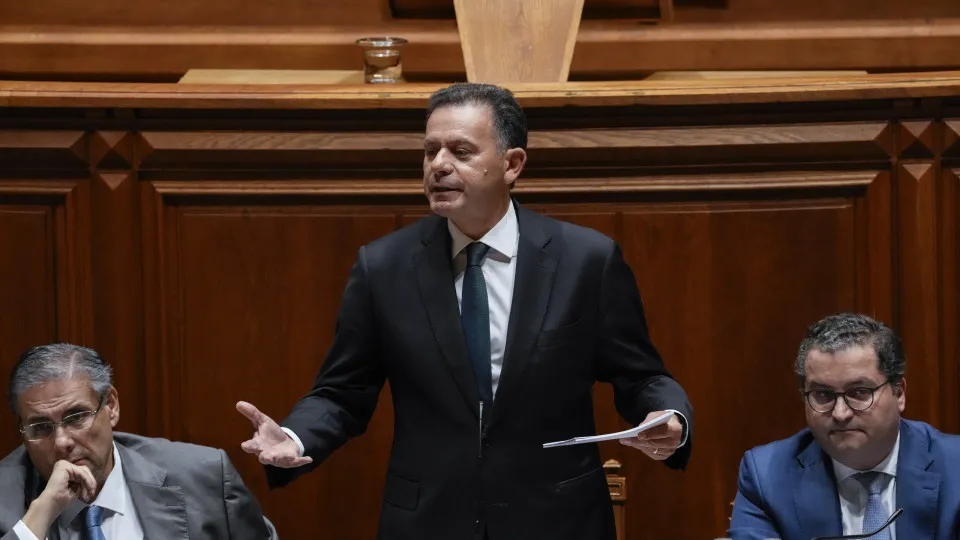
Prime Minister Luís Montenegro said today that he also “did not like what he saw” in the demonstrations for housing, but defended the performance of the PSP, after criticism of the Free.
© Horacio Villalobos#Corbis/Corbis via Getty Images
27/10/2026
by
Lusa
O prime Minister said today that he also “did not like what he saw” in the demonstrations for housing, but defended the performance of the PSP, after Free accused him of “healing the spirits”.
This exchange of arguments took place during the first day of debate on the proposal for the State Budget for 2027, when Isabel Mendes Lopes argued that what happened on the weekend in the demonstrations in Lisbon and Porto was “absolutely unjustifiable”, accusing the executive’s chief of “encouraging the spirits” with his opening intervention.
The parliamentary leader also recalled that the President of the Republic, António José Seguro, today called for dialogue between parties to solve the problem, accusing Montenegro of not having heard it.
In the answer, Luís Montenegro rejected this thesis, stating himself available to dialogue but still defending his ideas, accusing the Free of wanting to impose his vision.
At this moment, the Prime Minister returned to the role of police forces in demonstrations in Lisbon and Porto.
“The honourable Member has urged me to recognise that scenes of aggression by citizens to the forces of authority or of non-compliance with the law or, possibly, the response by the forces of authority are not images that we like to see. Of course not, I also don’t like to see”, replied Montenegro.
The chief executive added: “From what I observed, security forces only intervened last, ‘last ratio’ [Latin expression for last resort].”.
Luís Montenegro considered that “every effort was made so that everyone could respect each other, so that all those who wanted and want to manifest themselves could do so, but that they could do so within what the rules are and in respect for the rights of others”.
“ We will continue to look at these events with concern, to listen, of course, to the claims of people, but also to ask them to respect the rights of others and to respect the work of the forces of authority that exercise it on our behalf”, he concluded.