
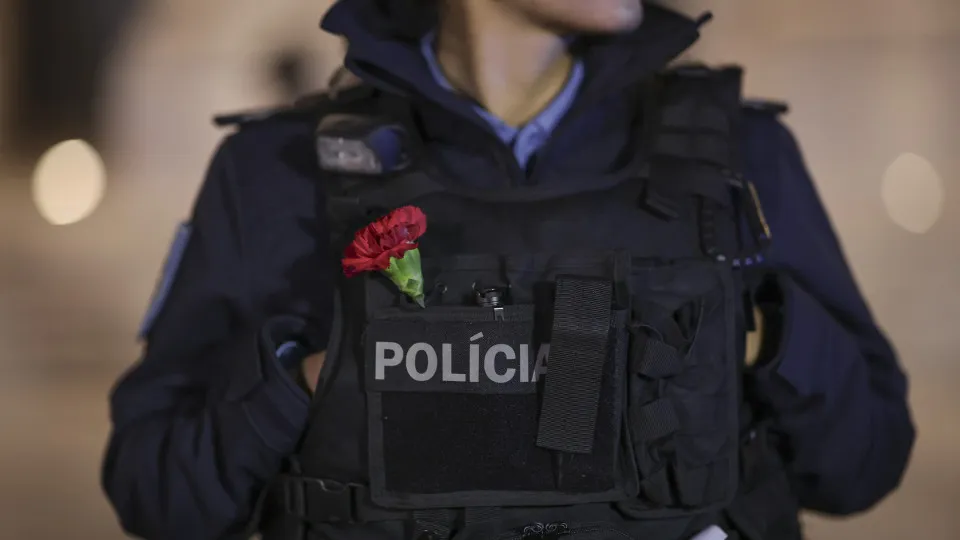
Several PSP agents have put red carnations in their uniforms in recent days, while watching the demonstrations for the right to housing, which have taken place in Lisbon and Porto. Some were offered by college students, others by a florist.
© PATRICIA DE MELO MOREIRA / AFP via Getty Images
03/11/2026
by
Vthe civil servants of the Public Security Police (PSP), who traveled the demonstrations for the right to housing, in recent days, in Lisbon and Porto, put red carnations in uniforms visible to everyone.
On Saturday, October 31, in Invicta, where the camps began, a group of university students distributed carnations to the police who were in Praça D. João I. Some have accepted, timidly, as can be seen in the images shared by SIC News.
Others, such as Deputy Commissioner Eduarda Fan, placed the flower on their shoulder, as Miguel Carvalho says, in her opinion column, in the TSF.
Already on the night of Monday, November 2, in Rossio, Lisbon. About 5 to 6 police officers repeated the gesture, as it was possible to see on several television channels, including RTP1 and SIC News.
According to this latest television channel, a florist who was distributing red carnations to protesters, also gave flowers to journalists and agents who were there and these took the carnations and put them in their uniforms.
What these agents' gesture means is for now unknown. What is known is that the red carnation is a symbol of freedom, of the April Revolution.
Remember that on 25 April 1974, the military placed the red carnations – offered by Celeste Caeiro – in the pipes of their rifles as a sign that they did not want to fire and that the regime change would be peaceful, without resorting to mass violence.