
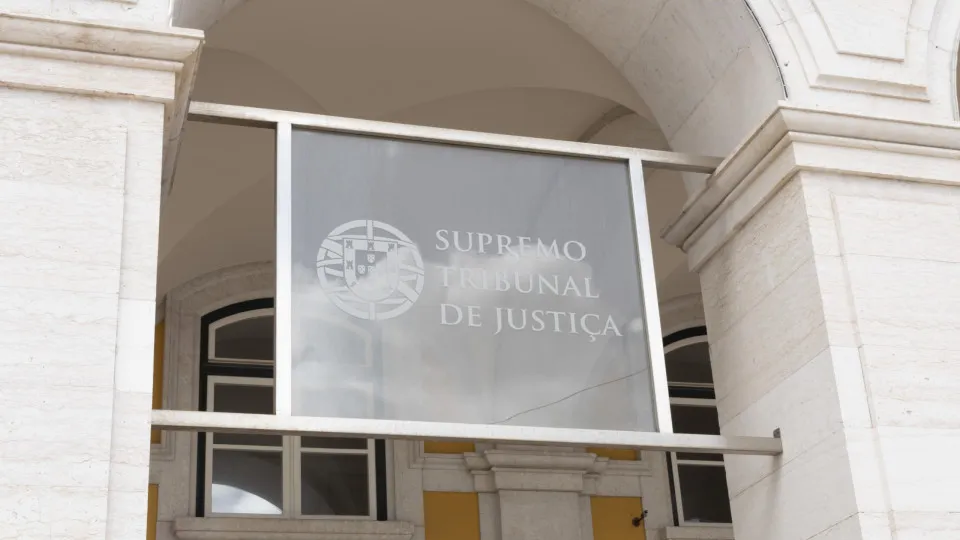
The president of the STJ defended the need to regulate the right to demonstration, adapting the legislation of 1974 to the current times, in an allusion to recent protests in Portugal.
© Luis Boza/NurPhoto via Getty Images
28/10/2026
by
Lusa
O president of the Supreme Court of Justice (STJ) today defended the need to regulate the right to demonstration, adapting the legislation with more than 50 years to the present day, in an allusion to the protests of recent days in Portugal.
“The law is 1974, we are already in 2026, it might be appropriate to regulate the right to the demonstration, now according to all life, which has changed,” said João Cura Mariano, in Maputo, when questioned by journalists on the margins of the XIV Conference of the Forum of Presidents of the Supreme Court of the Portuguese-speaking Countries and Territories.
The president of the Portuguese STJ recalled that the country has “a law prior to the Constitution” in regulating the right to demonstration, but warned that “one thing is the fundamental right to demonstration, but it is not an absolute right, that demonstrations can be made at all times, at any time, so there must be a regulation”.
However, he emphasized, this “regulation has to be done in such a way as not to make the right of manifestation impossible”.
“That is, you have to respect the principles of proportionality (...). I confess that I do not know in detail this law of 74, so I know that there are people who say that it respects, that it is proportional, others say that it does not ", pointed out.
Asked about protests for the right to housing and police action, João Cura Mariano said that, by images, it is “hard” to have an opinion about any excesses.
“ Our demonstrations are much more peaceful. If we think of France, Spain, we see that, perhaps according to the characteristics of the Portuguese people, they are actually more peaceful. Then, even how the police could or could not [act], it is very difficult, did not want to go into that detail”, he said.
On the same occasion, the president of the Portuguese Supreme still admitted the “perception” of the citizens about the slowness of the justice system, but stressed that it does not correspond to the reality in the general process.
“ This perception often has to do with the best known processes, which are the most difficult and which actually take too long. Then, if we see the generality of the processes, for example compared to the European average, they are even quick. But public opinion is not aware of all other processes that exist,” he observed.
Still, João Cura Mariano admitted that it is possible to do better, immediately using support for new technologies.