
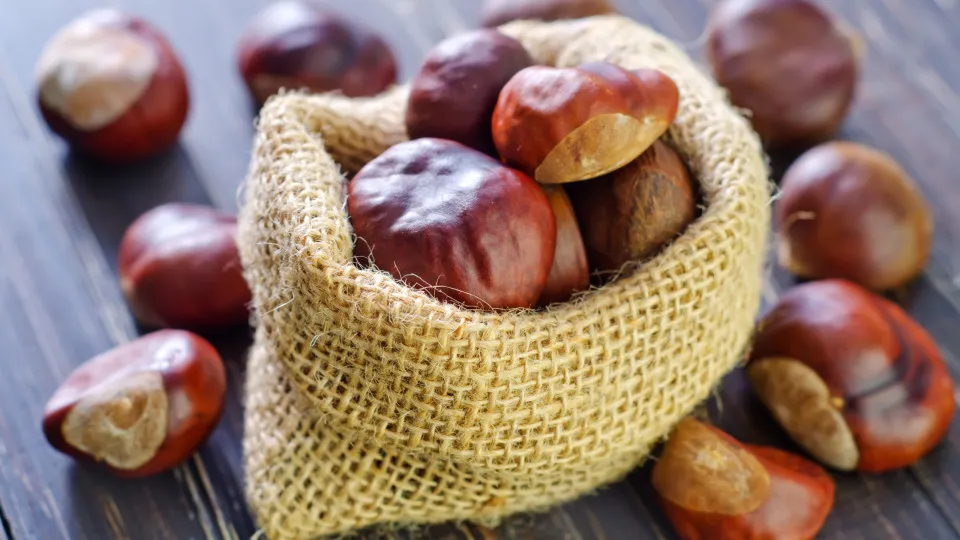
The hot and dry weather caused a significant decrease in chestnut production in Marvão, with producers pointing to falls of up to 70% from normal years, aggravated by increased production costs.
© Shutterstock
02/11/2026
by
Lusa
Marvão
O hot and dry weather damaged the production of chestnuts in Marvão, Portalegre district, with producers considering that this is an “out-of-normal” year, also aggravated by the increase in production costs.
In statements to the agency Lusa, chestnut producer José Mário, who this year directs most of his production and also the purchase of the fruit from other producers, for the drying and production of flour, recalled that “in normal years” transformed between 10 and 12 tons and this year has “about two tons” for this purpose.
“ Production this year had breaks [in the region] from 70% to 80%, I don't remember it like this. We have already had great difficulties, but, like this year, it is something out of the ordinary”, he said.
In the Marvão area, with a microclimate considered unique, provided by the Serra de São Mamede, predominate in the chestnut fields of the species Baria and Clarinha, but there are farms with other varieties, also of Protected Designation of Origin (PDO), between national and foreign.
José Mário also indicated that this year the calibre of the chestnut is low, but the fruit, although scarce, “is always quality” in the Marvão area.
In addition to the fact that hot and dry weather did not help producers, production and labour prices worsened the situation.
José Mário reported that he recently hired three people to pick up chestnuts on his farm and, at the end of the day, collected “only about 20 kilos”, a value considered scarce to meet the expense.
Also in statements to Lusa, producer Jeremiah Marques stated that this is “a miserable year” for production, although the quality of the chestnut “not bad at all” in the region:
He also regretted that the “major part” of the fruit will be on the ground this year, because the hedgehogs (capsules where the chestnuts are) do not fall from the trees or, when they fall, the chestnut “is already damaged” due to the high temperatures recorded in recent times.
“If the year were good, this year I could get seven or eight tons. So, if it is at four it will be good ", lamented.
Pointing to losses in production in the region in the order of 50% to 60%, Jeremiah Marques, who also bets on drying the chestnut, also explained that the little fruit that remains does not serve to freeze, due to the lack of moisture it presents.
“ Those who have the possibility of turning the chestnut into dried chestnut, dehydrated, is the only way to save it, because it is so low humidity that for the area of freezing goes with a content that then can not do anything ", said.
Both producers indicated that the chestnut is being marketed in the Marvão area at prices ranging from three to four euros per kilogram, depending on the variety concerned.