
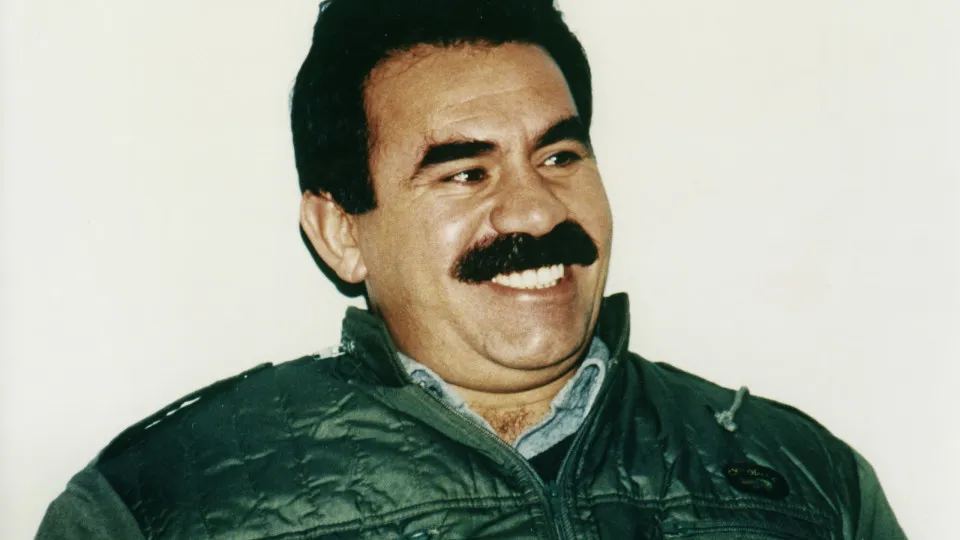
Turkey has transferred Kurdish leader Abdullah Ocalan to a new wing of an island prison, where he has been detained since 1999, in the framework of efforts to end decades of conflict, announced a high Kurdish leader.
© Bonn-Sequenz/ullstein bill via Getty Images
01/11/2026
by
Lusa
A Turkey transferred Kurdish leader Abdullah Ocalan to a new wing of an island prison, where he has been detained since 1999, in the framework of efforts to end decades of conflict, announced a high Kurdish leader.
Improving the prison conditions of Abdullah Ocalan, leader of the Kurdistan Workers' Party (PKK), has been one of the main requirements of the Kurds in their efforts to end the 42-year conflict between the armed group and the Turkish authorities.
Ocalan has been detained since he was captured in 1999 in a prison on the island of Imrali, on the Marmara Sea, which links the Black Sea to the Aegean Sea.
Mithat Sancar, the Kurdish leader, confirmed on Saturday the transfer of Ocalan in an interview with the TV station Medya Haber TV, without further details.
Sancar did not confirm that the new wing of the prison, recently built, has better housing conditions, although its statements seem to point to this.
The pro-Kurdish Member of the DEM Party also called for the acceleration of the peace process, saying that it has been “stopping” for two months.
The transfer of Ocalan to the new facilities, he said, “makes it necessary to speed up the peace process.”.
Sancar has been a member of a group of members of the DEM Party who has regularly visited Ocalan since the Kurdish leader appealed to the PKK in February 2025 to dissolve and surrender the weapons.
Ocalan remains an influential figure among the Kurds and is considered fundamental to the advancement of the peace process.
Three months later, the PKK announced that it would depose the weapons and put an end to hostilities. Following this announcement, the Turkish parliament passed legislation in August providing for conditional amnesty for thousands of PKK fighters, later promulgated by Turkish President Recep Tayyip Erdogan.
The conflict with the PKK, considered a terrorist organisation by Turkey, the United States and the European Union (EU), has caused tens of thousands of deaths since 1984.
Sancar stressed that Ocalan, co-founder of the PKK in the 1970s, must play a coordinating role in the peace negotiations.
“The process cannot go ahead with unilateral expectations and demands”, he said, in a reference to the Turkish Government, adding that it “must abandon its insistent and inflexible position”.