
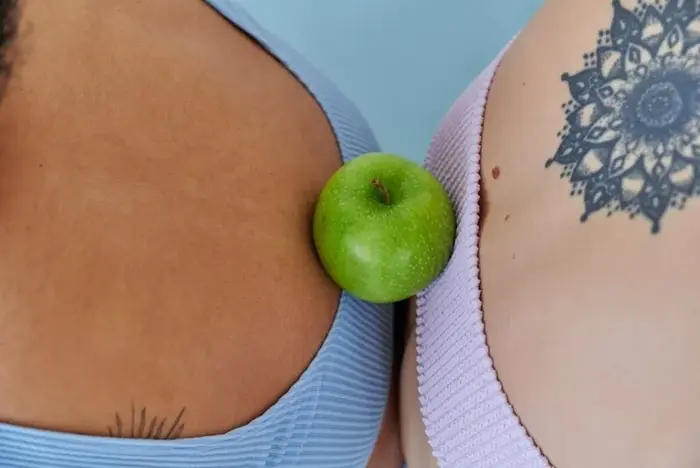
Two parts of our body always reveal the truth about our age: neck and hands! What for? Because the skin of these two parts of the body is thinner, with less fat and sebaceous glands.
At the same time, a healthy and shiny skin is a reflection of good health and inner well-being. Feel good and your skin will shine – instantly and gloriously – as never before! Still, we can make some small changes to help our skin become healthier, smoother and softer. Opting for clothes and fabrics that don't piss you off would be a good start, because we wear them all the time!
Some softer tissue options for skin
Scientists and fashion professionals are collaborating and striving to produce and use fibers and tissues that are skin friendly. However, there is still no standard evaluation system or certification method for skin-friendly textiles.
However, we know that some tissues will be more appreciated by your skin and are a great help for people with skin diseases such as eczema, psoriasis, dermatitis (contact) or even for cancer patients whose skin is alive due to radiotherapy or who have rashes and wounds caused by the effects of chemotherapy on the skin.
Specifically, experts say it is best to avoid synthetic fabrics, but Lyocell, a semisynthetic fabric (composable and durable), is a good option to consider. Viscose is also an interesting choice, just like Lyocell, is semi-synthetic and made from natural sources (regenerated cellulose), looks silky and has the same touch of cotton!
Natural tissues are always considered the best choice. They provide softer touch and lighter sensation when coming into contact with human skin. Cotton, linen and silk are skin-friendly fabrics, as well as bamboo that, thanks to its antimicrobial action, will keep your skin free of bacteria.
Choose nature!
The more natural and organic the fiber used in making your clothes, the better for your skin! This is an obvious conclusion... of course! We have already mentioned cotton, linen, silk or bamboo, but linen and hemp are two materials that provide soft fabrics that probably do not irritate sensitive skin.
As a general rule, look for softness, opt for fibers and fabrics that increase the effects of freshness and breathability on hot days or keep it warm (without uncomfortable friction) on cold days. Look for fast drying clothes with antistatic properties and high moisture absorption.
Before you buy your next piece of clothing, try it on, feel it and your skin will know if this piece of clothing is made for you.
If love is love at first sight, comfort is like love at first sight. Love and comfort, is there a better combination when it comes to clothes?
10 Fabrics that help prevent skin problems
It's time to summarize and make a list of 10 tissues that will help you prevent or minimize dermatological problems related to clothes!
- Cotton
Cotton is hypoallergenic and its breathability will help to naturally dry the skin after sweating! If it's a good choice for baby skin, it's a good choice for everyone! - Flax
Another hypoallergenic tissue. It is also antibacterial and perfect for hot summer days as it helps regulate body temperature. - Merino wool
If you want to use wool, choose merino wool! It is soft and cute and will keep you warm without causing irritation. It is breathable and dissipates excess heat, avoiding overheating. - Hemp
A very resistant fabric that, thanks to its natural coloring, does not require chemical dyes and that, in time, becomes softer and softer! - Silk
It's hypoallergenic and will keep your skin fresh and soft. Silk is a great option if you look for sheets and pillowcases for lucid dreams and bright skin! - Lyocell
A hypoallergenic and absorbent tissue without chemicals. Lyocell is a thin fiber cellulose material made of eucalyptus. It is soft and fresh and although it is not a natural fabric, it is used to make some of the best clothes of eczema! - Viscose
Made from raw material, viscose can be a good alternative to cotton or silk, as it offers a touch similar to that of the skin. - Rayon
This fiber (very similar to viscose) is breathable and absorbs moisture. It is a cellulosic fibre made of cellulose obtained from wood pulp (usually pine, fir or hemlock) - Cupro
Cupro is a type of cotton produced from another part of the plant, the cotton linter. It is extremely breathable, thermoregulatory and hypoallergenic, preventing bacteria from sticking to the skin and growing there. Not bad for the young cotton cousin.. - Seacell
Like most tissues presented, Seacell is hypoallergenic and absorbent. Seacell is made of natural algae. It can help relieve the effects of skin diseases and reduce inflammation. Now you can take some sea wherever you go!

Sustainable fabrics
The best thing about tissues that don't attack the skin is that they are also ecologically correct! Let us not forget that healthy skin rhymes with a healthy planet – and vice versa!
The skin is our largest organ and, even if we do not realize, it is filled with holes that absorb – permanently – all microparticles present in the atmosphere. Doing our best for our planet means doing our best for the health of our skin.
What are the most durable fabrics?
- Lyocell
- The modal
- Woven fabrics of cork
- Organic cotton, hemp and flax
- Qmilk
- Bananatex
- Vegan leather (mushroom leather, Piñatex leather, granular leather or cactus leather and many other options available if you want to be... Vegan!)
It's highly recommended! Next time you go shopping, read the labels, ask how the clothes you are buying are made. Where do they come from? How were they produced? They certainly have a long story to tell! Know this and many useful details will arise.
Sustainability, equality, creativity, respect, inclusion, sustainable production methods and a more relaxed day to day will help you prevent or reduce skin irritations. Anything that can help us reduce our stress levels is helpful! A healthy ecosystem acts as a remedy, not as a poison. This is the height of health and prevention.
The first step to health and luminosity is just a choice! Let's do it!
Le premier pas vers la santé et la luminosité n’est qu’un choix!
Bio
Joan Calabia acts as digital leader of Dockers® International (in Levi Strauss & Co). Joan's experience ranges from marketing operations to the creation of immersive experiences. He continues to lead the direction of the brand in adapting to the new generation of casual consumers of our time, while maintaining the cool California lifestyle, which is the priceless heritage of the brand.
Note: guest posts are the sole responsibility of the authors.