
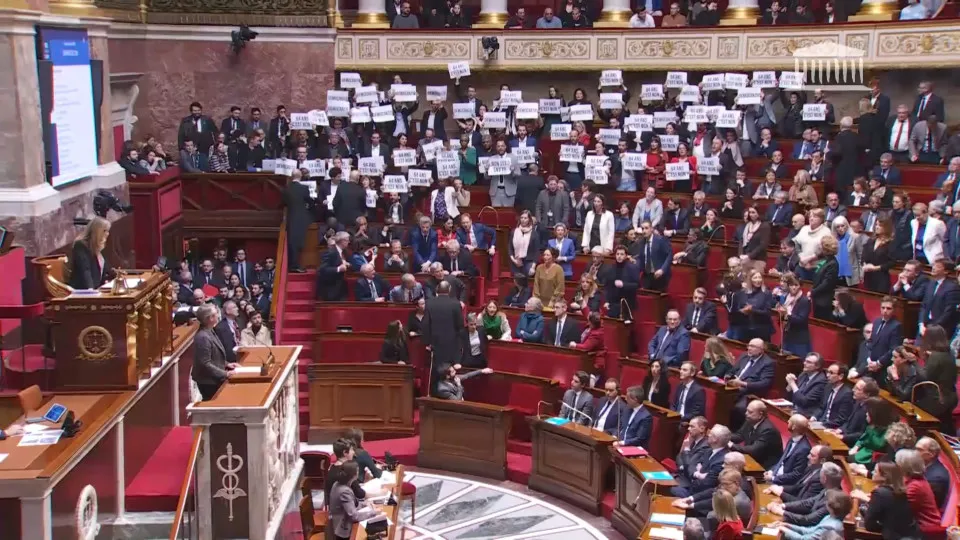
The French National Assembly unanimously rejected the first part of the 2027 budget, a new setback for the government of Sébastien Lecornu, which does not have a parliamentary majority.
© Assembly Nationale
04/11/2026
by
Lusa
French National Assembly
A The French National Assembly, the lower House of Parliament, today unanimously rejected the first part of the draft budget for 2027 on state revenue.
The decision arose after more than two weeks of debate and represents a new setback for the government of Sébastien Lecornu, which does not have a parliamentary majority.
The document received 458 votes against and none in favour, a result which the centrist executive expected, since the amendments adopted during the proceedings substantially changed the balance of the initial proposal.
The changes, driven by different opposition forces, included various measures, such as the elimination of a tax exemption for offshore wind installations, the resumption of the obligation to issue electronic invoices for self-employed and small enterprises, as well as the creation of new taxes for large companies.
Prior to the vote, Minister of Public Accounts David Amiel defended the need to adopt both savings measures and new sources of revenue to reduce the public deficit.
The original project envisages an effort of EUR 54 billion to reduce the government deficit to 5% of GDP by 2027.
“ We cannot say ‘no’ to all savings and to all revenues, when we need both to reduce our public deficits,” said Amiel.
The minister maintained that it is still possible to reach a parliamentary agreement on the budget project, as occurred in 2024 and 2025.
Now, the project goes on for processing in the Senate (high chamber), where the conservative and centrist majority will be able to approve a substantially changed version, probably with less tax revenues and expenditure cuts.
Last year, the upper chamber eliminated some EUR 8 billion in additional tax revenue that had been included during the debate in the National Assembly.
The lack of a stable parliamentary majority led the executive to keep different options open to enable public accounts.
Among these, recourse to Article 47 of the Constitution, which allows the budget to be approved by decrees, should the parliament not speak within 70 days.
This mechanism, designed to prevent a budgetary blockade and ensure the financial continuity of the State, has never been used since the establishment of the Fifth Republic.
The alternative would allow the government to avoid the use of Article 49.3 of the Constitution, which allows the adoption of a text without parliamentary voting, but exposes the Prime Minister to a motion of censure, which could lead to the fall of the executive and the rejection of the budget project.