
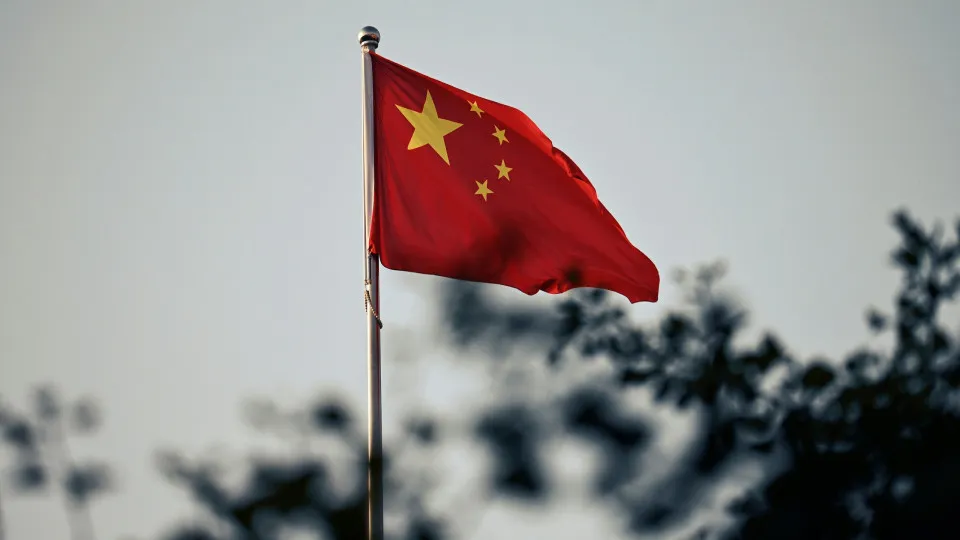
China has exempted visas from 35 European countries, including Portugal, strengthening air links with the continent, according to the President of the European Travel Commission.
© Shutterstock
20/10/2026
by
Lusa
A china’s decision to exempt citizens from 35 European countries, including Portugal, has helped strengthen air links with Europe, the President of the European Travel Commission told Lusa.
Beijing began in 2023 to exempt citizens from six European countries by extending the period of stay to 30 days. The measure covers around 50 countries, including 35 European states, and was extended until the end of 2026.
“ It is true that the number of Europeans travelling to China from European countries covered by the visa waiver programme has increased dramatically,” Miguel Sanz said in an interview with Lusa.
According to official data, 17.8 million tourists entered China visa-free in the first half of the year, plus 30.6% more than in the same period of 2025.
“ I believe this has also benefited from connectivity between China and Europe, as more people are travelling in the opposite direction,” said the President of the European Travel Commission (ETC).
The ETC is an organisation that brings together 35 tourism promotion agencies in Europe, including Tourism in Portugal.
The visa-free programme “is beneficial not only for China, but also for Europe in a way, because it allows connectivity to grow, which is always a good indicator,” Sanz said.
The European Union closed the airspace to Russian aircraft after the invasion of Ukraine in 2022, and Moscow retaliated with similar prohibitions, making the links between Asia and Europe longer and more expensive.
More than four years later, the Spanish leader stressed that direct flights between mainland China and Europe, as well as connections with stopovers in places such as Hong Kong, Singapore, Tokyo and Seoul, “are in full expansion”.
However, the crisis in the Middle East posed a new obstacle, as airports in the region represented 14% of global air traffic, including “a large part of connectivity between Asia and Europe,” Sanz acknowledged.
“ It is clear that the situation in the Gulf [Persico] has made it even more difficult to travel between China and Europe,” said the president of the ETC.
Still, Sanz stressed that “there is great interest” in travel between Asia and the European continent, in both directions, and that operators have been able to “find ways to redirect these travellers”.
“ I hope that the situation in the [Persico] Gulf will improve as soon as possible, as the airlines in the region play a key role in connectivity between Asia and Europe,” added Spanish.
Sanz acknowledged that the “geopolitical situation” has “refreshed a little” the interest of tourists in long distance travel to Europe, which seems “more difficult than they were a year ago”.
But “traveling is still at the top of consumers’ wishes,” said the leader, who set an example for China, a market with “the highest percentage of people who want to travel to Europe in the next 12 months”.
In April, the ETC released a report stating that the interest in travel has been at the highest level since 2020, although with less travel, shorter duration and more moderate budgets due to uncertainty and conflict in the Middle East.
“ Prices are something we have to look at. The airline tickets are getting very expensive”, defended the director-general of the tourism promotion agency of Spain.
“ We all need to help alleviate the situation because it would be very harmful if connectivity were affected because airlines prefer not to operate their planes due to the cost of fuel,” Sanz told Lusa in Macau.
The president of the ETC was in the Chinese region about the Forum for the Economy of Global Tourism, whose 12th edition had the theme “Crise, Resilience and Evolution”.