
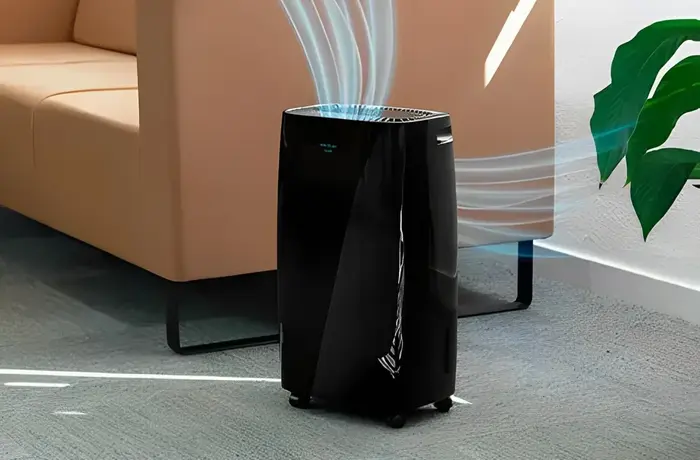
Maintaining adequate humidity levels at home is essential for health and comfort, as well as protecting furniture, walls and other belongings from excessive humidity. A dehumidifier is a practical solution for controlling moisture.
What's an Air Dehumidifier?
One dehumidifier it is a device that removes excess humidity from the air, maintaining the relative humidity level in a comfortable and healthy range, usually between 40% and 60%. For when the environment is very humid, it can contribute to the emergence of mold, mites and other allergens. The dehumidifier helps prevent these problems, making the air healthier and more pleasant.
Benefits of Using a Dehumidifier
Prevention of Mold and Mites
High humidity environments are ideal for fungal growth and mites proliferation. A dehumidifier reduces these risks, improving air quality.
Comfort and Wellness
High humidity environments can cause discomfort and feeling of muffle. The use of a dehumidifier makes the air cooler, providing greater comfort.
Preservation of Furniture and Structures
Woods, fabrics and walls can suffer from excessive humidity. The dehumidifier prevents the degradation of these materials by maintaining moisture at safe levels.
Factors to Consider when Choosing an Air Dehumidifier
Environment Size
One of the main factors when choosing a dehumidifier is the size of the environment in which it will be used. For the device to be effective, it needs to be able to remove moisture from the air based on the area.
Small Environment Dehumidifiers
For rooms, bathrooms and smaller areas (up to 15m2), compact models are sufficient and usually have a removal capacity of up to 10 liters per day.
Medium Environment Dehumidifiers
For environments such as living rooms or offices up to 30m2, opt for appliances with a capacity between 10 and 20 liters per day.
Large Environment Dehumidifiers
Wide areas such as basements or large rooms (above 40m2) require more powerful dehumidifiers with a capacity of 20 liters or more per day.
Moisture Removal Capability
The moisture removal capacity is measured in liters per day (L/day). The choice depends both on the size of the environment and the moisture level present. In extremely humid areas, it is important to choose a model with greater extraction capacity.
Humidity Level Control (Higrostat)
Hygrostat is a function that allows adjusting the desired moisture level. With it, the dehumidifier switches off automatically when reaching the programmed level, saving energy and avoiding excessive moisture removal.
Dehumidifier Types
Condensation dehumidifiers
This type of dehumidifier uses a compressor to cool the air and condense moisture in the form of water, which is stored in a reservoir. They are efficient in environments with moderate ambient temperature.
Dehumidifiers Desiccants
Desiccant dehumidifiers use a material that absorbs air humidity. They are ideal for cooler environments, where condensation dehumidifiers are not as effective.
Portable Dehumidifiers
Portable models are easy to move from one room to another, allowing greater versatility in use. They are ideal for those who need to control moisture in different areas of the house.
Important Additional Features
Reservoir Capacity
The water extracted from the air is stored in a reservoir. To avoid the need to empty it very often, choose a dehumidifier with a reservoir compatible with the amount of moisture extracted daily.
Continuous drain
Many models offer the option of continuous drain, allowing water to be eliminated directly by a hose, without the need to empty the reservoir.
Noise Level
The noise level can be a decisive factor, especially if the dehumidifier is used in rooms. Thus, check the device's decibel specification (dB) and choose a quieter model if noise is a concern.
Energy Consumption
Dehumidifiers, especially those with compressors, can consume a considerable amount of energy. Check the energy efficiency of the device to minimize the impact on the light bill.
Extra Functions
Many dehumidifiers come with additional functions such as integrated air filters, timers, full reservoir indicators and adjustable operating modes such as “night mode” or “continuous mode”. These functions can increase comfort and practicality in daily use.
Conclusion
Choosing a good air dehumidifier requires careful assessment of the environment, humidity level and its specific needs. Thus, consider at least factors such as space size and moisture removal capacity.
With the right model, you can improve air quality and ensure a healthier and more comfortable environment.
See also “How to Reduce Humidity Inside” for more ideas and suggestions!