
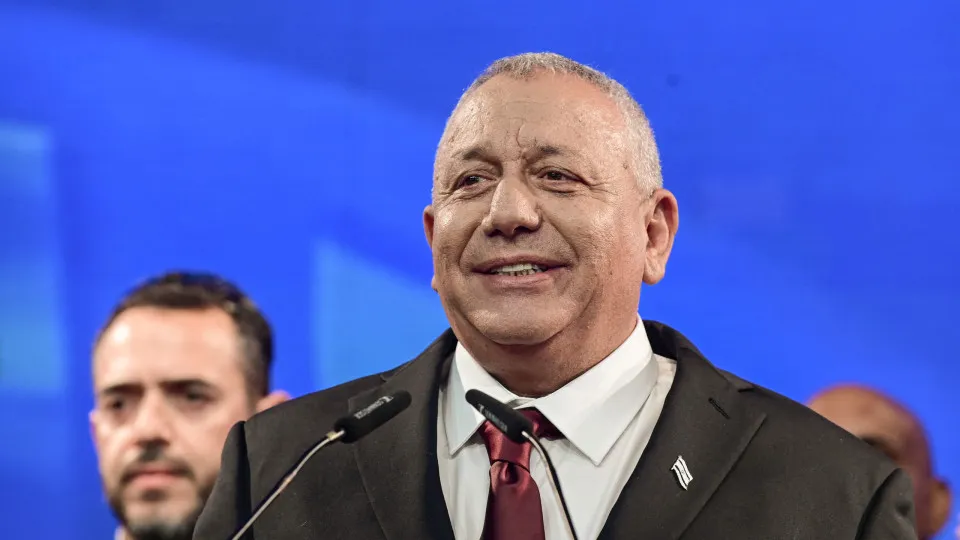
The leader of the Israeli opposition, Gadi Eisenkot, announced today that he will propose the creation of a state commission of inquiry into the failures that allowed the massacre of 7 October 2023 after the inauguration of the new parliament.
© Tomer Neuberg / Middle East Images / AFP via Getty Images
29/10/2026
by
Lusa
O leader of the Israeli opposition, Gadi Eisenkot, announced today that he will propose the creation of a state commission of inquiry into the failures that allowed the massacre of October 7, 2023, after the inauguration of the new parliament.
“ Several teams are already working to finalize the preparations for various initiatives: a [universal] recruitment law in the Israeli Army, the creation of a state research committee on the October 7 massacre and a reform of the budgetary mechanism to give priority to those serving the country,” Eisenkot said in a video message.
“ The plans are ready and, in coordination with my partners, we will put them to the vote as soon as the Knesset part-session (Israeli Parliament) begins”, with a date scheduled for 10 November, added the leader of the Israeli opposition bloc and leader of Yashar! (Rep.!).
The announcement arises in a context of controversy about complaints of electoral fraud in the 27 October legislation in Israel and foreign interference, which opened a new front of political tension in the country.
The Likud, party of the acting Prime Minister, Benjamin Netanyahu, denounced alleged irregularities that he attributed to Arab parties — including the alleged distribution of money for the purchase of votes and voting bulletins of the Arab Muslim party Ra’am, which won eight seats in the provisional count.
The Israeli police rejected the accusations that the Arab parties had tried to “save the elections” and said that there is no evidence to support them.
In turn, the President of the Central Electoral Commission, Noam Sohlberg, asked Shin Bet's head (internal secret services) to investigate complaints about possible foreign interference in the electoral act, although he was unable to confirm whether they were justified.
The Israeli media pointed to suspicions of possible funding from Qatar to increase Arab participation, an accusation that Doha denied.
In a statement, Eisenkot accused Likud and Netanyahu of promoting a coordinated campaign to delegitimize election results, and warned him that he would not allow deviations in the planned schedule for Knesset's inauguration, scheduled for November 10.
In the same line, the party leader The Democrats, Yair Golan, accused Netanyahu of trying to stay in power and confirmed that the opposition will seek to replace the President of Parliament, repeal the laws of judicial reform and create a state inquiry committee, according to a message published on their channels.
The dispute takes place in a scenario of parliamentary uncertainty: according to the most recent data, the Netanyahu bloc totals 53 deputies, against 48 of the opposition — both below 61 mandates needed to reach the parliamentary majority.
The Arab parties have 19 representatives — the best result of their history — and can play a decisive role in forming an alternative government, although they remain excluded from both blocs.