
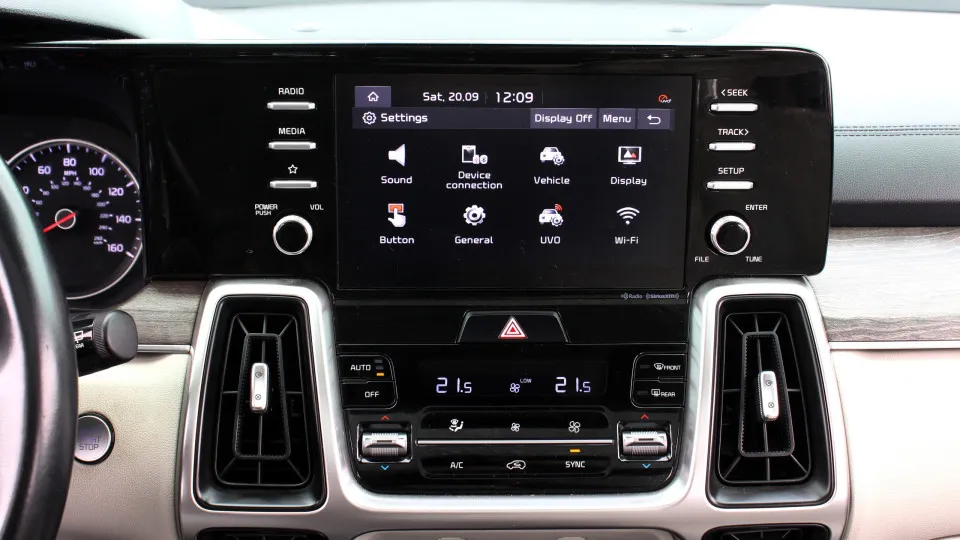
The increasing digitisation of cars has done much at the expense of physical controls, with touch screens and voice control serving to manipulate various functions. But there are manufacturers that are retreating.
© Shutterstock
12/10/2026
by
A technological development has changed the way of interacting with cars, with the touch screens and voice commands opening new control possibilities. Often the sacrifice of traditional buttons and physical switches.
The question of security arises, once you look and operate a touch screen requires the deviation of the look from the road while driving.
Euro NCAP introduced new requirements for its tests in 2026 – which require physical controls for certain functions considered essential (such as flashes, horns, eCall emergency calls or windshield wipers) in order to get the maximum notes.
Having said that, not everything has to be physical for a car to succeed in assessing its safety. According to Auto Express, a Euro NCAP spokesman rejected making the inclusion of physical controls to control climate and multimedia mandatory, considering that “are not critical tasks“. In addition, he claims that “it is not proven that direct physical control is safer“.
Customers prefer and manufacturers return to physical commands
Regardless of security, customers themselves – particularly in Europe – show a preference for physical commands in cars and there are manufacturers that meet these requirements.
One example is Volkswagen, who retreated in the scan of the functions and again included more buttons in the cars. But it's not a single case.
Euro NCAP recently assessed Audi Q7, Kia EV2 and Xpeng, seeing that “car manufacturers are making a constant return to the favor of buttons and physical switches for basic functionsinstead of using touch screens and voice control”.
Differences between European and Chinese manufacturers
Of these, Q7 received a 90 percent rating for driving controls – 100 percent for essential tasks and 80 percent for comfort and infoentertainment.
Kia EV2 obtained 100 percent in both parameters. On the other hand, experts consider that Xpeng X9 depends too much on the central touch screen and added only 20 percent to the primary driving controls (80 percent for infoentertainment and comfort).
Moreover, according to the Euro NCAP, “there are clear differences between european and chinese manufacturers“, with the scoring of European cars on the buttons for basic functions being considerably higher. And there was even a car from China – the Leapmotor B05 – with a zero percent score for driving controls.