
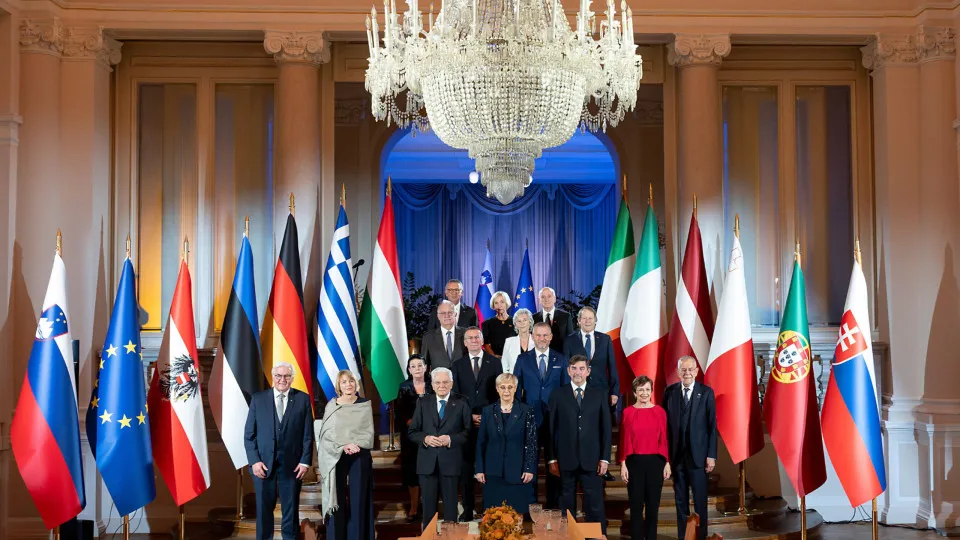
The President of the Republic, António José Seguro, today warned that “a Europe in which so many young people cannot access a house” risks “losing the trust of the new generations” by intervening in a meeting of the Group of Arraiolos.
© Lusa
16/10/2026
by
Lusa
O President of the Republic, António José Seguro, today warned that “a Europe in which so many young people cannot access a home” risks “losing the trust of the new generations” by intervening in a meeting of the Group of Arraiolos.
In his speech at the plenary session of the 21st meeting of the Group of Arraiolos, which takes place in the Slovenian locality of Brdo, in the vicinity of Ljubljana, Slovenia, the Head of State said that “a Europe that requires its citizens to trust, sacrifice and patience must demonstrate that they know how to turn these efforts into results”.
“We cannot ask Europeans to choose unity without showing them what unity can achieve,” he said, warning that “a Europe in which so many young people cannot access a home, build a family or believe that their work will enable them to live better risks losing the trust of the new generations”.
I am sure that, in a brief statement on the arrival of Brdo, for its debut in meetings of the informal group of Heads of State of the European Union without executive power, it has already advocated “better cooperation and more political integration” in Europe, in areas such as housing, energy and security and defence, has focused its intervention on this idea.
“There are times in history when nations have to decide whether they want to be led by events or whether they are willing to make history. I believe that Europe has come to one of these moments,” he said, according to his speech at the plenary session, held behind closed doors but made available to journalists.
“The war has returned to our continent. Peace, which for decades many Europeans have taken for granted, has again required determination, resources and courage. Competition between powers has become harder. Our economic and technological capacity is under pressure. And within our societies, the concern of citizens who work, fulfill their obligations grows and yet feel that the future has become more difficult to achieve,” he said.
According to the President of the Republic, “in the face of this reality, Europe must make a choice”, between continuing to discuss its differences and delay the most difficult decisions or recognizing that its security, prosperity and freedom depend on the ability to act in a determined manner.
Defending the need to preserve European integration, Seguro said that this means Europe “deciding on time and time, gaining autonomy in areas such as defence and energy, being more competitive and responding urgently to common social problems such as housing and the need for life”.
In the same way that he warned that Europe risks losing the confidence of the new generations, even because he does not have the right to demand them “to be content with the achievements of the previous ones”, the President of the Republic warned that “a Europe that cannot finance the priorities it proclaims, which loses industrial and technological capacity and which depends on third parties to ensure essential goods for its safety” also risks “losing the freedom to decide its own destiny”.
“ So we need a Europe that makes choices. That you invest in your defense. To regain the ability to produce and innovate. To mobilize the resources necessary to compete. To treat housing, employment and opportunities for young people as central issues of democratic trust,” he said.
In order to facilitate decision-making, it advocated the need for the EU to revisit the unanimity rule required in several areas of Community policy and considered the enhanced cooperation opened to be fundamental, a mechanism whereby a number of Member States can move forward in terms of integration or legislation when there is no unanimity between the 27.
“We cannot do everything at the same time. But we must decide what is essential and stop delaying what we know to be indispensable,” he continued, recalling that an electoral cycle is approaching in several EU Member States, “which can define Europe’s direction for many years”, in a context where nationalism threatens European cooperation and integration.
“ Citizens will decide freely. Our responsibility is to ensure that they find a Europe capable of responding to their concerns, without promising them easy solutions or hiding the dimension of the challenges,” he said, in the conclusion of his speech, to “let this be the time of political courage, responsibility and action.”.