
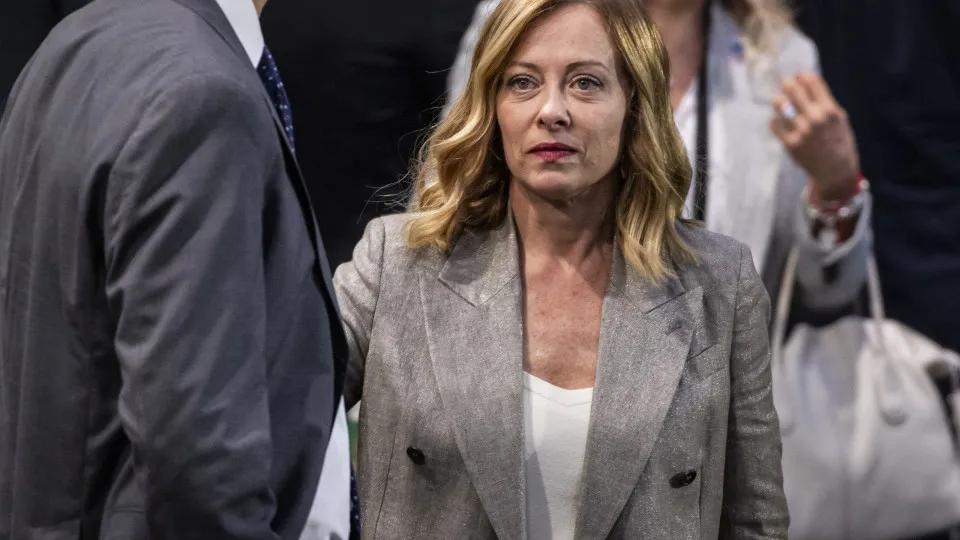
Italian Prime Minister Giorgia Meloni and 18 EU leaders have committed themselves to maintaining a high level of surveillance at the external borders of the bloc following the Ceuta migration crisis. The initiative aims to strengthen migration control mechanisms and prevent irregular entry.
© Getty Images/SAMUEL CORUM/AFP
16/10/2026
by
Lusa
A italian Prime Minister, Giorgia Meloni, and other 18 EU leaders have committed themselves to “maintaining a high level of surveillance at the external borders” of the Community bloc following the Ceuta migration crisis.
“ With regard to recent events in Ceuta, I stressed the need to maintain a high level of surveillance at the Union’s external borders, focusing on preventing irregular immigration and associated security risks,” Giorgia Meloni wrote in a publication on social networks.
“I also addressed the possibility of a specific review of European legislation to make new procedures for the detention of irregular migrants in border procedures more effective,” he added.
The initiative is part of a cooperation effort between Member States which advocate strengthening European migratory control mechanisms and seeking innovative solutions for managing such flows.
In the margins of the second day of the European Council today in Brussels, Giorgia Meloni met informally with the Prime Ministers of Denmark and the Netherlands, Mette Frederiksen and Rob Jetten, respectively, at a meeting with the participation of the European Commission.
In addition to Italy, Denmark and the Netherlands, Austria, Belgium, Bulgaria, Cyprus, Croatia, Finland, Germany, Greece, Latvia, Lithuania, Malta, Poland, Slovakia, Slovenia and Sweden were represented.
The meeting aimed to evaluate the progress made in recent months and to discuss the next initiatives, focusing on preventing irregular mass arrivals, instrumentalising migrants and implementing the new European legislative framework.
The migration crisis in Ceuta, a Spanish enclave in North Africa that registered a mass entry of migrants from Morocco at the end of July, aggravated the differences between European governments on migration policy and the response to irregular arrivals.
Following the crisis, Italy temporarily reintroduced controls at the internal borders of the Schengen area with Spain, with the decision, which was similarly answered by the Spanish authorities, to be justified by the need to prevent secondary movements of migrants and to respond to the risks to internal security.
In this context, several European leaders, including Giorgia Meloni and Mette Frederiksen, have advocated a coordinated EU response, with greater surveillance of external borders, prevention of irregular entry and strengthening of migration management mechanisms.
The European Commission has been defending the implementation of the measures already agreed at Community level, while different governments are calling for additional amendments to strengthen the ability to prevent and respond to irregular entry.