
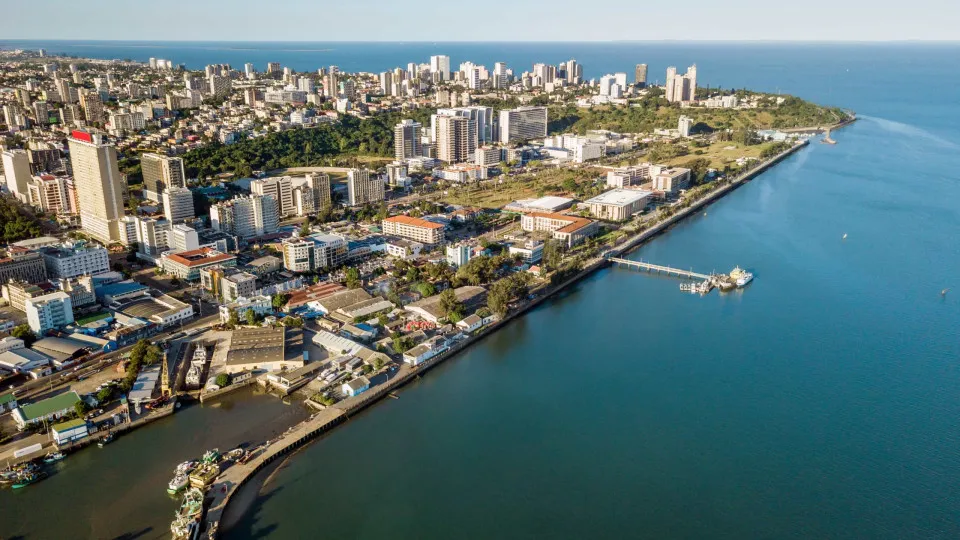
Mozambique has adopted exceptional measures to make the customs procedures for fuels more flexible, with extended deadlines up to the end of the year, in response to further supply difficulties.
© Shutterstock
14/10/2026
by
Lusa
O mozambican government approved exceptional and temporary measures to relax customs procedures applicable to fuels, after further difficulties in supply, extending deadlines for storage and clearance of petroleum products, in force until the end of the year.
In a diploma published by the Ministry of Finance, consulted by Lusa, the executive justifies the decision with the need to “ensure simplification in the process of submitting Declaration of Entry into Warehouses designated for Petroleum Products”.
Mozambique has no refining capacity, so fuels such as gasoline and diesel are imported.
Ministerial Diploma No 80/2026 provides that the Declaration of Entry into Warehouse for petroleum products intended for internal consumption shall be submitted “within a maximum of 30 calendar days from the date of end of unloading at the customs office of destination”.
The document also provides for the possibility of “extension for another 15 days of the legal deadline for the submission of the declaration of entry into storage”, subject to the authorisation of the competent customs authorities.
In parallel, it provides that “the customs clearance of petroleum products must be processed within a maximum of 65 calendar days”, which can also be extended for another 15 days in duly substantiated situations.
The scheme also provides that the operator responsible for the import must notify Customs of the arrival of the goods up to five days before the discharge of the petroleum products.
According to the Decree, during the duration of these measures the periods laid down in the general regulation on customs clearance applicable to this type of goods shall be suspended.
The Ministry of Finance determines that the new rules have “provisional and exceptional nature” and should “vigorate until 31 December 2026”.
The entry into force of this exceptional regime arises a few weeks after the government has ensured that fuel supplies run smoothly, despite the queues registered at the end of September in some supply stations in Maputo and other provinces.
At the time, the Ministry of Mineral Resources and Energy attributed the constraints to logistical difficulties during a long weekend, which affected the regular cycle of fuel loading and distribution.
The executive then indicated that he had reinforced operations at the Matola Terminal to accelerate the loading of the tanker trucks and ensured that the available reserves allowed the city of Maputo to supply until the arrival of a ship with 8,000 tons of gasoline.
These disturbances occurred sometimes after the supply crisis that affected different regions of the country between April and May, a period marked by long queues at the stations, temporary closure of some pumps and difficulties in supplying fuel to consumers and carriers.
At the time, the Government associated some of the constraints to the impact of the conflict in the Middle East on international energy markets and supply chains, explaining that about 80% of the fuels imported by Mozambique originated in that region and passed through the Strait of Ormuz.
At the same time, Banco de Moçambique acknowledged difficulties in accessing currency to finance fuel imports due to the alleged lack of capacity of some companies in the sector.
Data from the central bank indicate that Mozambique spent $236.4 million (EUR 203.5 million) on fuel imports in the first quarter of 2026, minus 1.4% against the $239.6 million (EUR 206.3 million) of the same period of the previous year.
In response to the effects of the supply crisis and the rise in international prices, the government decided in May to increase administered fuel prices, resulting in a 45.5% increase in diesel and 12.1% in petrol.