
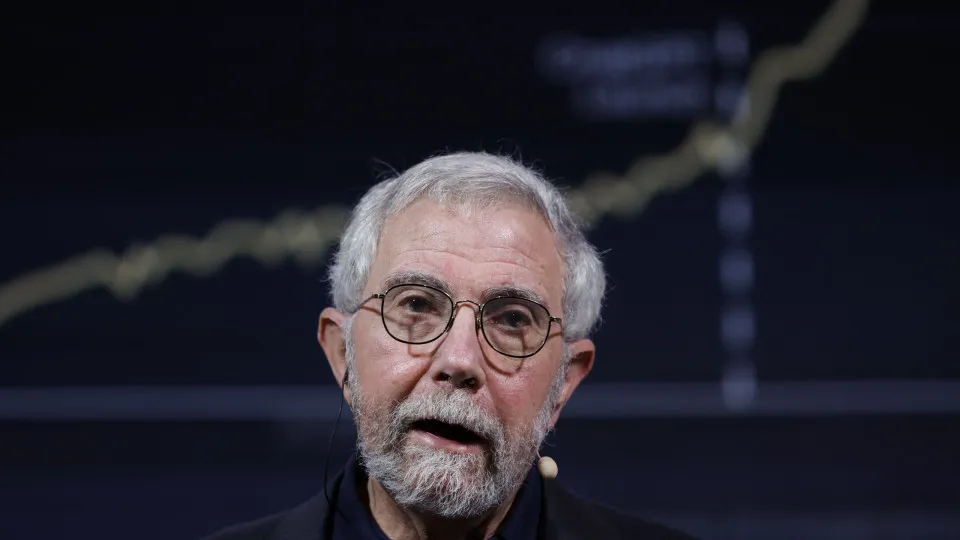
Economist Paul Krugman warned that Portugal may be affected by the crisis in France, given that it is a small country and that investors have a memory of the 2012 crisis.
© Lusa
29/10/2026
by
Lusa
O economist Paul Krugman said today, in an interview with Lusa, that there is a risk that Portugal will be harmed by the situation in France, considering that it is a small country and that investors have memory of the 2012 crisis.
The American economist and Nobel Prize winner of Economics in 2008 admitted that the situation in France makes him “very nervous”, reminding him, at a slower rate, “a version of what happened in Europe in 2010, after Greece entered ‘default’ [non-compliance with its sovereign debt]”.
Although it is not as severe as the situation of the Greek economy at the time, at least until now, France is such an economy that there is concern that the whole of the Eurosystem is fragmented due to this crisis, it has warned.
Krugman did not consider it to be the most likely result, even because the authorities would do everything in their power to try to prevent it from happening, but said it is “definitely frightening.”.
In terms of contagion effects for Portugal, the economist noted that the bases of the economy are not bad but still admitted that it is a small country, on the periphery, also damaged by the memory of the crises.
“Investors have not forgotten 2012,” the economist warned, in a reference to the sovereign debt crisis, pointing out that the possibility that Portugal may be harmed is very real.
France is experiencing a delicate financial situation, with a public debt under pressure from the markets, which has resulted in a strong increase in interest and risk premium, which has been at the highest levels since 2012, one of the critical moments of the financial crisis.
The country has also been facing several protests for weeks against rising cost of living and conditions in schools.
The rise in energy prices, which have skyrocketed following the conflict in the Middle East, has also raised questions as to whether governments should go forward with support or pay attention to budgetary discipline, he noted.
If it was a normal situation, with a difficult temporary shock, then the government should try to protect people, because it is temporary, as happened in the covid-19 pandemic, where it was possible to overcome the crisis with minimal “economic suffering”.
However, today the large advanced economies have a “higher public debt than Portugal in 2011,” he noted, and interest rates are at levels that have not been seen in decades, so governments need to be much more contained.
“ I have always been an optimist in saying that it is acceptable to go to markets to respond to emergencies, but at this point, is this an emergency enough?” the American economist questioned, pointing out the level of concern for the debt situation.
It is not necessary to think of the possibility that there may be problems, ironic, because you can see what is happening in France now, you have concluded.