
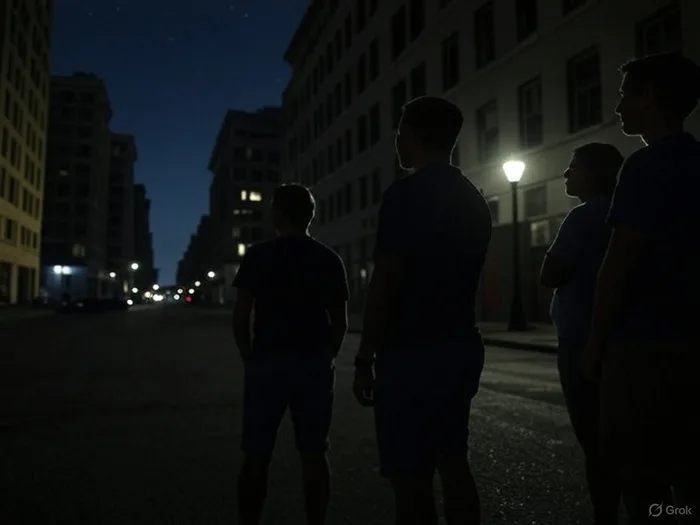
On April 28, 2025, a large blackout simultaneously affected Portugal and several regions of Spain, interrupting the supply of electricity to millions of people for several hours.
The incident had significant repercussions on everyday life, transport and essential services, as well as raising concerns about the stability and resilience of electrical infrastructure in the Iberian Peninsula.
In addition, almost all fixed and mobile telecommunications have been out of business for several hours. This left people uncommunicable, except those who had radios to listen to and communicate.
What are the causes? Next, see the possible causes of the blackout as pointed out by official sources, energy operators and large press outlets, highlighting the most plausible hypotheses and ongoing investigations.
Causes of the blackout by Official Sources (29 April)
- Power generation/transmission failure: The Spanish system manager (Red Electrica de España, REE) reported “strong oscillation of power flows” accompanied by “very important generation loss” at the beginning of the incident (swissinfo.ch). In particular, two episodes of sudden generation drop (probably in solar plants in southwestern Spain) were identified which caused instability and led to the disconnection of interconnection with France (news.uol.com.br). In practical terms, this would amount to an abrupt disconnection between generating plants in the southwest of the Peninsula, a hypothesis pointed out by the Spanish operator itself as probable cause (p.euronews. with andnews.uol.com.br). This generation collapse exceeded the expected margins of security, triggering the disconnection of the Iberian network from the rest of the European system (swissinfo.ch).
- Rare atmospheric phenomenon: There was initial speculation about an unusual weather event: news agencies reported that REN (Portuguese operator) attributed the blackout to a rare “induced atmospheric vibration” generated by extreme temperature variations in high voltage lines (cnnbrasil.com.br). In this version, anomalous oscillations in the 400 kV network would have caused synchronization failures in the electrical system (cnnbrasil.com.br). However, REN itself publicly denied having made such a statement (cnnbrasil.com.br andp.euronews. with). The Spanish weather institute (AEMET) also stated that there was no atypical atmospheric phenomenon on the day of the blackout (swissinfo.ch). Thus, this meteorological hypothesis has lost power and is not confirmed by official sources.
- Cyber attack: Some vehicles highlighted speculations about a possible coordinated cyberattack. However, Portuguese and Spanish authorities dismissed this hypothesis. The National Cybersecurity Centre of Portugal declared no evidence of computer attack associated with the blackout (infobae. with), and the president of the Portuguese government (Luís Montenegro) said that there is no sign of “outside attack” and that all indications have originated in Spain (infobae. (com). In Spain, the director of operations of REE stated that initial analysis allowed to rule out any invasion of control systems (elpais. with). The Vice-President of the European Commission, Teresa Ribera, also stated that there was no indication that the cut was provoked externally (elpais. with). In spite of this, the Spanish Court opened an investigation to investigate possible “computer sabotage” (considered a terrorist crime) as part of the investigation, since no scenario was officially excluded (swissinfo. chand p.euronews. (com).
- Unbalanced offer-demand: Experts mentioned that a sudden mismatch between generation and consumption could bring down the network. In theory, an abrupt fall in production (e.g. renewables) not accompanied by immediate reduction in load could cause overload and safety shutdowns (p.euronews. with). The director-general of Neara listed this “dramatic imbalance” as a possible cause, along with physical network failure or cyberattack (p.euronews. with). There is still no official confirmation of this theory, but it is part of the ongoing analysis given the high penetration of renewable sources in the Iberian mix.
- Human error or specific technical failure: The REE operator stated that there is no evidence of human error or deliberate operational failure so far (p.euronews. (com). Although not detailed equipment was affected, this possibility was considered (and discarded) in the initial analyses. The hypothesis of accidental shutdown or improper maintenance was also investigated, but the authorities did not indicate any such anomaly as a cause.
- Hypothesis in research and divergences: So far there is no official consensus on a single cause. Authorities maintain multiple lines of investigation. The Spanish government formed technical committees and Justice opened an investigation into possible computer sabotage (without, however, confirmation of attack) (p.euronews. with). The Portuguese government requested independent audit of the European Agency for Energy Regulators to clarify the origin of the blackout (p.euronews. (com). Politicians differed publicly (e.g. accusing government omission), but authorities emphasize caution and transparency (swissinfo. ch andp.euronews. (com). In summary, official sources make it clear that the problem originated in the Spanish network (p.euronews. with)(p.euronews. with), but the exact cause is still being cleared and hasty speculations have been denied (p.euronews. with andswissinfo.ch).
New information on the causes of the blackout (Updating to 02 May)
Investigations are still open. So far there is no official conclusion on what caused the power cut. On May 2, the Spanish minister Oscar López stated that “it would be absurd to rule out any hypothesis,” confirming that all the lines of investigation follow examination (lasexta. with). Spanish Prime Minister Pedro Sánchez reiterated that, so far, cannot determine the cause of the blackout(cnnbrasil.com.br).
REN denies “rare phenomenon”. Portuguese manager REN released a statement denying reports that attributed the blackout to a “rare atmospheric phenomenon” in the Spanish network (cnnbrasil.com.br). According to REN, this statement was not made by the company – which continues to concentrate on the re-energization of the national electrical system. New hypotheses will only be confirmed by official sources.
Delivery of the “black box”. Spanish operator Red Electrica reported that it provided Pedro Sánchez’s government with the “black box” of the electrical system with millions of data from April 28 (lasexta.com). This device records the entire operation of the system at the time of the blackout. The shipment meets requests from the authorities and will help technicians to analyze precisely what happened before, during and after the fall of energy .
European Research Panel. On 1 May 2025 the European ENTSO-E (Network Managers) announced the creation of a expert panel to investigate the causes of the incident (entsoe.eu). The initiative follows EU legislation for “serious incidents”. The panel will prepare a detailed analysis and final report with recommendations to be published later. European national and regulatory authorities will monitor the investigation.
Telecommunications Failed
Old landlines worked even during power cuts, which contrasts strongly with the current situation! Today the mobile networks and internet fail almost instantly with the interruption of electrical supply.
Even the current fixed phones are subject to very fast failures. At this point there seems to have been a clear regression. Moreover, given that these shortcomings leave the incommunicable populations, even for emergenciesI'm sorry. In addition, these impacts are direct on payment systems, ATM machines and therefore, in general trade.
Why old landlines were more resilient:
- Powered by the telephone network itself ( PSTN line):
Traditional analog fixed telephones received electric power directly from the telephone network (copper line), provided by telephone stations, which had own backup batteries and generators. - Equipment without own power supply:
Basic telephones (no digital display or extra functions) no external energy needed, running only with minimal current coming from the operator.
Why modern telecommunications quickly fail:
- Dependency of the domestic and commercial power grid:
Routers, modems, cellular antennas (base radio stations), optical fibre plants (ONTs) and VoIP networks they need local power to work. If the location or neighborhood loses electricity, the network connection is also interrupted. - Current fixed telephony depends on internet and fiber optics (VoIP):
The modern “fixed telephone” offered by cable or fiber operators often it's not analog anymorebut yes voice over IP (VoIP). It depends on modems/routers and consequently on local electric power. - Mobile network stations have limited autonomy:
Cell towers have backup batteries, but these usually lasts from 15 minutes to a few hours. In widespread blackouts, they quickly exhaust — and if there are no generators or personnel to intervene, the network collapses. - Distributed and more sensitive infrastructure:
Unlike the telephone stations of the past, the modern network is much more distributed, with many fault points (microcells, switches, amplifiers, etc.), and not all are protected with reserve energy.
The reliability of old fixed telephones during blackouts was due to a centralized and self-sufficient architecture, with power guaranteed by the network itself. The current systems, despite being more advanced and efficient under normal conditions, are much more vulnerable to energy failures because they depend on multiple locally powered devices, both on the consumer side and on infrastructure.
This explains why, during the blackout of 2025, the telecommunications failed so quickly, severely affecting almost all fixed communications, mobile and internet access.
Conclusion
The blackout of 28 April 2025 in Portugal and Spain exposed the vulnerability of electricity systems increasingly dependent on renewable sources and complex management of interconnected networks.
Although there is still no single confirmed cause, the strongest evidence points to a sudden generation failure, possibly associated with solar production in southwestern Spain, which led to the collapse of the stability of the Iberian network and its disconnection from the European system.
The cyber attack hypothesis was initially considered but discarded by Spanish, Portuguese and European authorities.
However, research continues with technical and political monitoring, as operators and regulators reinforce the need for resilience, transparency and international cooperation to avoid new incidents of this nature.