
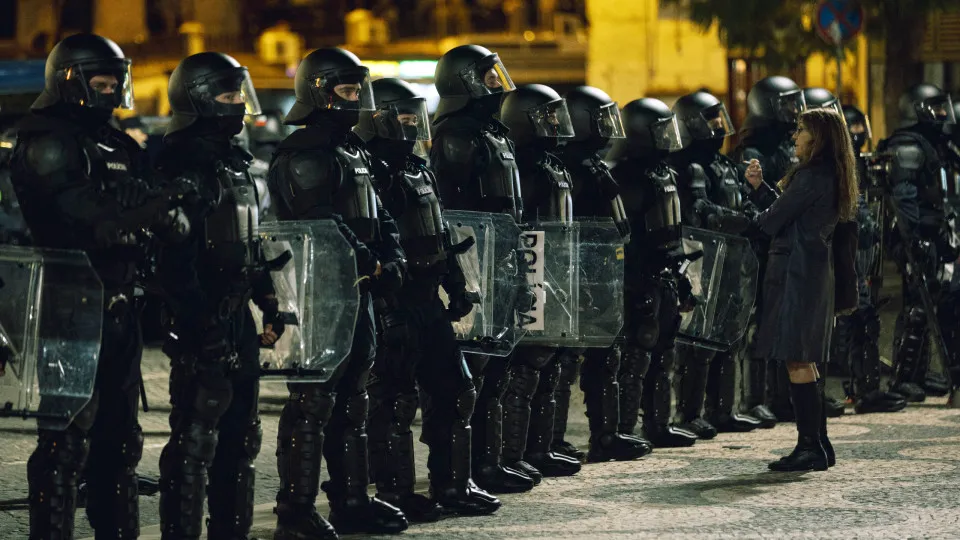
The Trade Union Association of Police Professionals (ASPP/PSP) today argues that demonstrations should take place peacefully and criticize the government for instrumentalizing police action.
© FRANCISCO ROMAO PEREIRA / AFP via Getty Images)
04/11/2026
by
News to Minutes
A Police Professionals Trade Association (ASPP/PSP) issued this Wednesday, November 4, a statement defending its position on how the police image has been affected due to demonstrations by the right to housing.
In a statement sent to the essays, this syndicate begins by defending that it believes “the exercise of manifestation must take place in a way peaceful, without weapons and respect for the constitutional framework”.
The largest and most representative trade union organization of the Public Security Police in Portugal is critical of the government's stance, particularly of its Prime Minister and the Minister of Internal Affairs, considering that Luís Montenegro and Luís Neves are at “exposure operatives on the ground to extreme situations, risking the image and reputation built by police officers with rigor and proximity over the years”.
Moreover, they argue that this security force is suffering “limitations to the freedom of its action” and is becoming “the burden of the housing crisis”.
“What conditions some today, tomorrow will limit the rights of all, including those of the police”, shoots the structure led by Paulo Santos, also making reference to the famous episode of the “Dry and Wet 1989”, a demonstration where hundreds of plain-clothes and unarmed police officers manifested themselves, having to be controlled with water cannons by their own colleagues.
“ More than antenna time, it is important to defend the police and demand that the government governs, negotiates and presents concrete solutions in housing, security and scrupulous compliance with commitments made with professionals, something that it has not done”, he concluded, refusing to feed even more “the media show”.
The demonstrations and so-called camps, with hundreds or thousands of protesters, against the housing crisis began in Porto on October 10 and expanded to Lisbon, but have also motivated concentrations in other cities.
The protesters demand the reversal of the new rental law, the end of demolitions and evictions without an alternative housing, a stop to the purchase of housing by real estate funds, the increase in public housing, the recovery of vacant buildings for housing purposes and ceilings “truely accessible” to income. These have been marked by police intervention against demonstrators.
However, protests have been marked by police charges against protesters in both Lisbon and Porto.
The PSP has also reiterated that it “respects and guarantees the exercise of the right of assembly and demonstration”, but the exercise of these rights must “be peaceful, with respect for the rights of other citizens, public order and tranquility and within the limits and constraints provided for in the law”.
On the other hand, he warned that the right to demonstrate “cannot justify acts of vandalism or damage to the public heritage”.
On the other hand, the President of the Republic, António José Seguro, has called for “dialogue and common sense” with regard to how to moderate demonstrations for the right to housing, recalling that “violence is not part of Portuguese democratic culture”.