
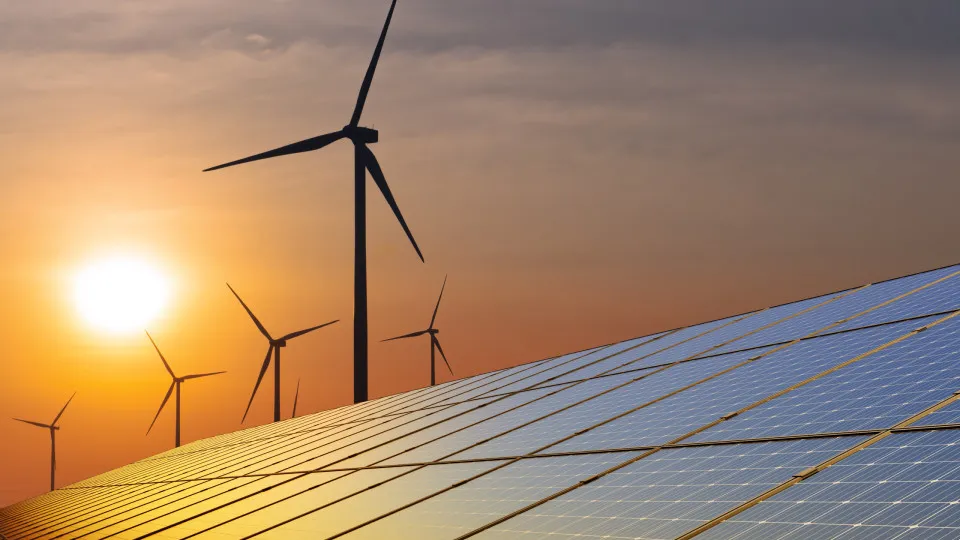
The Portuguese Environment Agency (APA) issued an unfavorable decision to the PV hybridization project of Penedo Ruivo wind farm in Serra do Marão, according to information from the Participate portal.
© Shutterstock
24/10/2026
by
Lusa
A Portuguese Environment Agency (APA) issued an unfavorable decision to the PV hybridization project of the Wind Farm of Penedo Ruivo, in Serra do Marão, according to information from the Participate portal.
“ Despite the positive impacts of the project associated with the production of electricity from renewable sources, taking into account the negative, significant and non-minimizable impacts identified at the level of determining environmental factors, the project is not compatible with the safeguarding of the values in presence, so it is issued an unfavourable decision to the PV hybridization project of the Windmill of Penedo Ruivo”, says the Environmental Impact Statement (IA) consulted by Lusa.
The photovoltaic hybridization project of the Penedo Ruivo Windmill in Serra do Marão proposed an area of 21 hectares, of which seven would be occupied with solar panels in that territory of the municipalities of Baião and Amarante, in the district of Porto.
Proposed by EnergieKontor, a net annual production of 24.86 gigawatt-hour, the production of electricity through a photovoltaic system in hybridization with the existing wind farm and a 30-year operating phase was expected.
According to DIA, given the ecological, territorial and landscape constraints existing in the area of study, namely the integral insertion of the project in the Special Conservation Zone (ZEC) Alvão/Marão and the overlap with areas integrated into the Protected Landscape of Serra da Aboboreira, it is considered “that possible modifications of the project within the area of study would tend to maintain the main significant negative impacts identified in the evaluation.”.
It also states that, although the project is based on a logic of hybridization and partial use of existing electrical infrastructure associated with the Penedo Ruivo Wind Farm, particularly at the level of electrical connection and substation, “this circumstance does not eliminate or reduce, by itself, the significance of the ecological, landscape, territorial and cumulative impacts identified in the evaluation, taking into account the characteristics of the proposed solution, the sensitivity of the area of implementation and the territorial pressure already existing in Serra do Marão”.
The public consultation took place between March 13 and April 24 and 666 exhibitions were submitted, 661 of private citizens and the others of the Association of Municipalities of Douro and Tâmega, the Union of Freguesias of Teixeira and Teixeira, the Portuguese Association for the Conservation of Biodiversity (FAPAS), the Association of Conservation of Nature and Rural Heritage (Palombar) and the initiative Visit Marão.
The consultation revealed that the overwhelming majority of citizens opposed the project, considering that, despite the importance of the energy transition, the installation of the photovoltaic power plant represents “a serious threat to a protected territory of high ecological, landscape, cultural and economic value”.
Significant impacts on protected habitats and species, landscape, nature tourism and local lifestyles, as well as failures in the environmental evaluation process and the analysis of alternatives, are pointed out, arguing that solar energy should be installed preferably in already artificialized areas.
According to the online documentation, only five citizens and the Teixeira and Teixeira Freguesias Union supported the project.
The Commission of Assessment, under the Environmental Impact Assessment (AIA) procedure of the project, gave an unfavourable opinion taking into account “the significant, direct, permanent and cumulative negative impacts identified, the high ecological, landscape and territorial sensitivity of the implementation area and the fact that it is not considered that the proposed minimisation measures are sufficient to ensure the appropriate environmental and territorial compatibility of the solution presented”.