
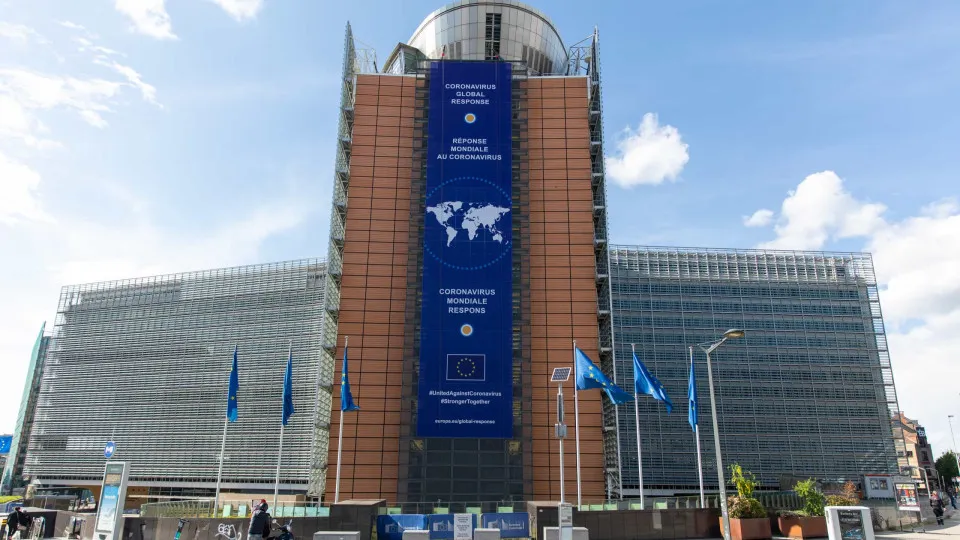
The European Commission has opened a formal investigation to the Swiss multinational Omya for suspected anticompetitive practices in the supply of calcium carbonate to the paper industry in the European Union (EU), today announced the institution.
© shutterstock
23/10/2026
by
Lusa
Omya
A European Commission opened a formal investigation to the Swiss multinational Omya for suspected anticompetitive practices in the supply of calcium carbonates to the paper industry in the European Union (EU), today announced the institution.
“The European Commission has opened a formal competition investigation to assess whether Omya has violated EU competition rules by requiring clients of the paper industry to acquire all or most of its calcium carbonates from Omya,” the EU executive announced.
It is concerned that the company, considered the largest supplier of this raw material in the European Economic Area, may have “abused a dominant position” by requiring customers to acquire all or most of its calcium carbonate needs from Omya.
According to Brussels, the investigation focuses on two types of practices: exclusive purchasing obligations, which would oblige customers to concentrate acquisitions on the company, and exclusive discounts, which would offer financial incentives to achieve the same objective.
“The Commission is afraid that these practices may have limited the ability of other calcium carbonate suppliers to compete effectively for the conquest of customers in the European paper industry,” the institution noted.
Calcium carbonates are used in the manufacture of paper as coating charges and pigments, contributing to reducing production costs and improving characteristics such as whiteness, opacity, softness and printing capacity of paper and cardboard.
The Community executive pointed out that the existence of competing suppliers and affordable raw materials “is important” to reduce the costs of paper mills and benefit consumers, including on the market for paper and cardboard packaging, increasingly used as an alternative to disposable plastic packaging.
If proven, the practices investigated may violate EU rules prohibiting abuse of a dominant position.
The European Commission has indicated that it will give priority to in-depth research, bearing in mind that the opening of the process does not anticipate its outcome.