
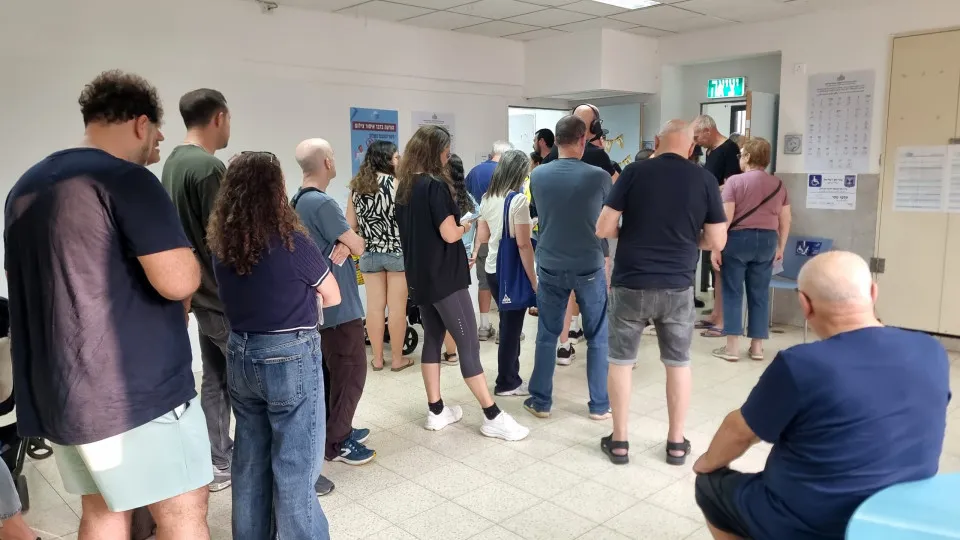
The candidates of the main parties began to vote in the legislative elections in Israel, which oppose two very close blocks in the polls, the one led by Benjamin Netanyahu and the one of the opposition, led by Gadi Eisenkot, pointed out as a favorite.
© David Silverman/Getty Images
27/10/2026
by
Lusa
Othe candidates of the main parties began to vote in the legislative elections in Israel, which oppose two very close blocks in the polls, the one led by Benjamin Netanyahu and the opposition, led by Gadi Eisenkot, pointed out as a favorite.
The first to vote, at 08:00 local (06:00 Lisbon time), was the Democratic leader, Yair Golan, who deposited his vote in the city of Rosh HaAyin, in central Israel, confirmed the party.
At the same time, it was also foreseen that the Minister of National Security and leader of the far-right Jewish power party, Itamar Ben-Gvir, would vote for Kiryat Arba, an Israeli settlement in the south of the West Bank, near Hebron.
Half an hour later, the Israeli President, Isaac Herzog, was expected to vote in Jerusalem as well as the finance minister and leader of the ultranationalist religious Zionism party, Bezalel Smotrich, who is supposed to vote in Kedumim, another Israeli settlement, located in the north of the occupied West Bank.
At 9:30 locals (7:30 in Lisbon), one of the leaders of the Beyajade party, current opposition leader Yair Lapid, had planned to vote for Tel Aviv.
The last to go to the polls will be the two candidates who compete for election.
The current prime minister and leader of Likud, Benjamin Netanyahu, is expected to vote at 11:00 local hours in Lisbon at a voting assembly in West Jerusalem, in an act whose coverage was limited to a limited number of selected media.
The leader of Yashar!, Gadi Eisenkot, favorite polls, should vote in the coastal city of Herzliya, north of Tel Aviv, at 13:45 locals (11:45 in Lisbon).
Before and after voting, on an agenda extending from the opening of the polls to 5:45 p.m. places (15:45 in Lisbon), Eisenkot will visit several voting assemblies, including one located in a kibbutz near the Gaza Strip border.
A total of 38 parties run for election, although only 11 are expected to exceed the 3.25% of the votes needed to obtain parliamentary representation. The latest polls point to a very balanced dispute between the two main blocs, none of which should reach a ruling majority without the support of the Arab parties.
These elections are considered decisive for the political future of Israel, after three years marked by the war in Gaza, regional tensions and an intense internal debate on security, governance and conduct of the conflict with Hamas.
The possible need for support from the Arab parties could once again give these formations a decisive role in the formation of the next government.