
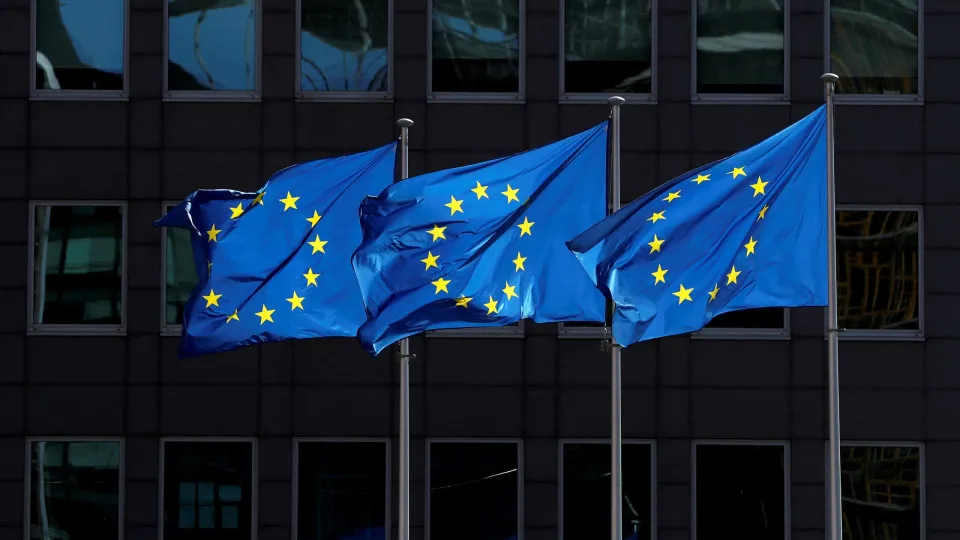
A delegation of MEPs today starts a three-day visit to China to address trade tensions with Beijing, following the agreement on hybrid vehicles and within the framework of Community plans to strengthen trade defence instruments.
© Reuters
27/10/2026
by
Lusa
Uthe delegation of MEPs is launching a three-day visit to China today to address trade tensions with Beijing, following the agreement on hybrid vehicles and within the framework of Community plans to strengthen trade defence instruments.
German MEP Engin Eroglu, member of the delegation of the European Parliament's Committee on International Trade and Chairman of the European Parliament's Delegation for Relations with China, confirmed the arrival in Beijing on social network X, where he explained that he held individual meetings with representatives of German companies, organised by the German Chamber of Commerce in China, shortly after the arrival.
Referring to a previous meeting with German entrepreneurs in May, Eroglu said that “a lot has changed since then”. “Not only in relations between China and Europe, but also in the economic and political context in which our companies operate daily,” he said.
The MEP defended the need to “go beyond talking about China at a distance” and to maintain direct contacts with those investing, producing and developing business activities in the Asian country, in view of what he described as a time of “uncomfortable issues” in the European Union.
In another publication, he said that “the solution for European industry is not in China, but in the capitals of the 27 Member States and Brussels”, although it was considered necessary to know firsthand the Chinese economic reality.
The delegation, led by the President of the European Parliament's Committee on International Trade, the German Social Democrat Bernd Lange, will visit Beijing, Hangzhou and Shanghai until Thursday, on the second visit of this parliamentary body to China since 2018.
The representatives of the European Union want to address with Chinese interlocutors the excess of industrial capacity, market access restrictions, European dependence on critical raw materials and the growing entry of cheap Chinese products.
The visit comes after Brussels and Beijing have come to an understanding to limit Chinese exports of hybrid vehicles to the EU, considered by both parties a breakthrough, although with different interpretations of scope.
The agreement provides, according to Community sources, for an initial quota of 350,000 vehicles per year, which will increase progressively.
The mission also arises after European leaders have called for new trade defence instruments against imbalances with China and the President of the European Commission, Ursula von der Leyen, announced for December the presentation of an instrument to reduce strategic dependencies.
Lange warned that the hybrid vehicle agreement is only “the starting point” of trade relations where, according to the European Parliament, the EU has a deficit with China of around EUR 1 billion per day.