
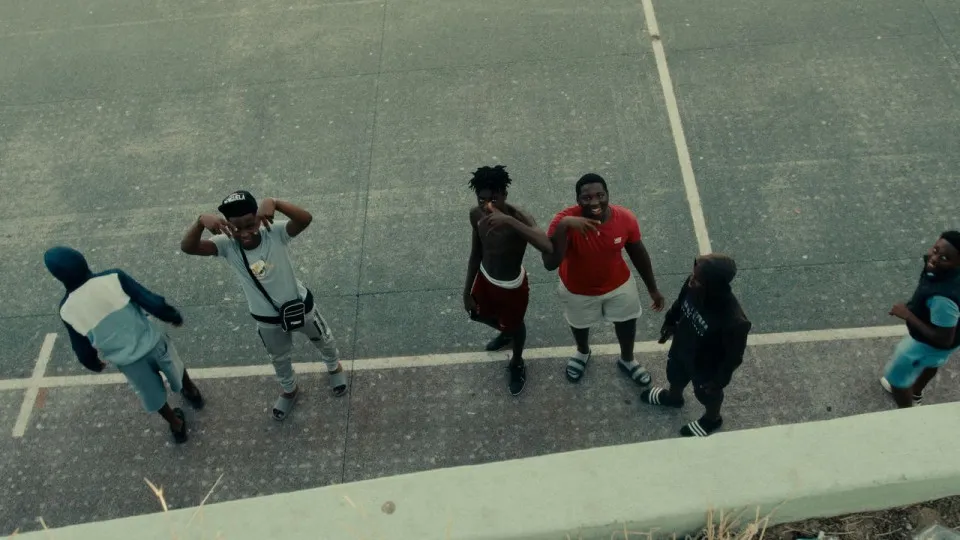
“Children of the Middle – Hip Hop à Margem”, documentary about rap on the South Bank, arrives at RTP2 and RTP Play tomorrow, October 27. Before that, News to the Minute spoke to the director, Luís Almeida.
© “Son of the Middle – Hip Hop at the Margin”
26/10/2026
by
Dafter the success of “New Hunting Narratives”, the documentary “Sons do Meio – Hip Hop à Margem”, also conducted by Luís Almeida, arrives at RTP2 and RTP Play tomorrow, October 27.
The 60-minute rap film on the south bank of the Tagus, which runs through the main milestones of the movement with the use of an enriching archive and memories of those who first inspired themselves on the tapes that someone made arriving in Portugal and passing by hand, debuted in 2025 at IndieLisboa IF and is shown on the public channel next Tuesday at 10:50 p.m.
Before that, the News to Minutes spoke with the director, who highlighted the role of hip hop as “a vehicle of propagation and very effective information”.
Looking at the current reality, with all these protests and general will to change and fight against fascism, hip hop will again have a key role to portray, educate a new generation, and not onlyLuís Almeida also highlights that “there are stories to be told that they were left out of the documentary”, but still allows “to tell many and show figures that were really important for the movement, such as the NEXO, who influenced a generation even though they did not have the opportunity to leave their work recorded in the best way”.
© “Son of the Middle – Hip Hop at the Margin”
“Middle Children – Hip Hop à Margem” focuses on territories that played an important role in the development of hip hop in Portugal. What was missing to tell you about the epicenter of Portuguese hip hop and what surprised you the most when performing the documentary? Was there really a part of the story that remained to be told?
It was quite established that the origin of the culture was in the Miratejo, but I think it is clear from the documentary that actually began in the Cova da Piedade, among the young people of secondary school. Naturally, the movement moves to the Miratejo, where it developed. Of course, all of this can be contested as culture was being born in various parts of the country at the same time, from Porto to Algarve.
What surprised me most was Nelson Neves' story, considered by many to be the one who really brought the culture to Almada, which, in addition to gathering youth around music, also defended it against the skinhead movement that emerged in the territory. He's a fascinating figure who's never had a chance to tell his story.
© “Son of the Middle – Hip Hop at the Margin”
And yes, there really was a part of the story I was about to tell. In fact, there are still stories to be told that they stayed out of the documentary. Still, we had the opportunity to count many and show figures that were really important to the movement, such as the NEXO, who influenced a generation even though they did not have the opportunity to leave their work recorded in the best way, but in this documentary I believe they get the highlight that was due to them.
In this context, to focus on stories that have always been outside the spaces of greater visibility, how important is the arrival of the documentary on public television?
It was one of our goals, we like to make movies to be seen and public television, free and universal, is one of the best ways to reach the public. In addition, I believe it is a way of giving some prestige to these stories which, although little known, have shaped Portuguese culture. They need to be known and valued, so they deserve space on public television.
How has the public been receiving the documentary at the festivals you went through?
It has been a very pleasant surprise, it has always been well received, with much enthusiasm and curiosity. Both by hip hop culture and by people outside the culture, who look at the film with a more anthropological interest compared to the nostalgic look of those who lived and lived the culture.
For those who followed the success of “New Narrative Hunting”, how would you convince them to see also “Middle Children – Hip Hop to the Margin”? Is there a common mission to these two projects?
They are different projects, but in fact they share the same mission: telling stories that would normally not have room to be told. Stories told in the first person, by whom he lived and with respect for his protagonists.
The film won the Golden Crane at the Festival Between Looks, the award for Best Documentary at Lisbiff 2025, and the award for Best Film at HipHop Cinefest in Rome, Italy. How important are these awards?
Winning awards is always good, it is a sign that we did good work in the eyes of our peers, legitimizes the producer and our work, opens up possibilities to do more and better projects. However, public recognition has been an equally or more important prize, and we hope that now, which has the possibility of reaching more people, this recognition will continue.
Hip hop also became popular as a form of expression of communities that, as discussed earlier, had no visibility in traditional media. Looking at the current Portuguese reality, in your opinion, do you think rap/hip hop continues to play this interventionist role or has the arrival at mainstream diluted that identity?
I think you still have that role and you always will. It is a musical style where the word is very important and therefore is a vehicle of very effective propagation and information. Of course the mainstream will always take what is most convenient to it, but the most interventional hip hop continues to exist, even I would say that hip hop in the underground is getting stronger and healthier. There are projects coming out, concerts happening, and anyone who really wants to discover this culture will find out.
And looking at the current reality, with all these protests and general will for a change and struggle against fascism, hip hop will again have a key role to portray, educate a new generation, and not only, that needs someone to help them understand the world and what is going on around them. It was so with me and it will certainly be so with a new generation.