
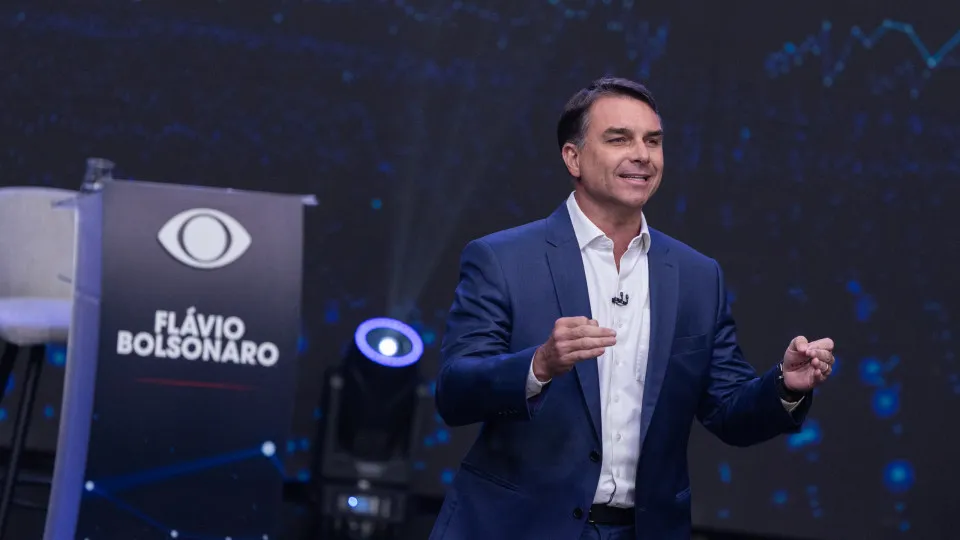
Brazilian presidential candidate Flávio Bolsonaro met today, in São Paulo, with about 400 digital influencers to expand the dissemination of his messages and win undecided voters five days from the second round.
© Tuane Fernandes/NurPhoto via Getty Images
20/10/2026
by
Lusa
O brazilian presidential candidate Flávio Bolsonaro met today, in São Paulo, with about 400 digital influencers, to expand the dissemination of his messages and conquer undecided voters five days from the second round.
“ More than ever, people can see that Brazil has two paths", said Flávio Bolsonaro, in front of the 400 opinion makers, who, according to the candidate's campaign, have about 200 million followers on social networks.
Outside the official campaign agenda and behind closed doors to journalists, to align the speech and produce content for social networks, the event promoted by the ‘coach’ Pablo Marçal had several figures such as the newly elected federal deputy by São Paulo Lucas Pavanato and the newly elected state deputy Eduarda Campopiano, who built part of their notoriety on social networks, with videos and publications of strong reach on political and social issues.
Lucas Pavanato gained projection with confrontations that viralize and positions against identity issues and policies related to gender identity, already Eduarda Campopiano stood out for criticism of feminism and so-called “gender ideology”.
Flávio Bolsonaro recorded videos with the influencers present, in the meeting with the presence of names as the entrepreneur of the fitness world Renato Cariani and the actor and winner of the ‘Big Brother’ Brazil Arthur Aguiar.
According to the local press, Pablo Marçal, responsible for part of Flávio Bolsonaro’s strategy in this second round, called for influencers to sell hope, “prosperity that generates pleasure, but [...] has to sell fear”.
What do you mean sell fear? Today the PT is using the tactic of fear”, said, according to portal G1.
Social networks have played a prominent role in this campaign, with the two candidates betting on the mobilization of supporters and the circulation of content.
On Lula da Silva's side, André Janones created the WhatsApp channel "Slave Army", which brings together more than 5.6 million followers and is used to coordinate the dissemination of messages favorable to the President's re-election.
The digital dispute has been accompanied by polemics involving the Meta, owner of Facebook, Instagram and WhatsApp, accused by Lula's campaign to restrict content favorable to the President and favor Flávio Bolsonaro through his algorithms and artificial intelligence tools.
In the first round, held on October 4, Flávio Bolsonaro obtained 47.03% of the valid votes, against 45.16% of Lula da Silva, an advantage of 2.224,965 votes, and since the introduction of the system of two rounds in the Brazilian presidential, in 1989, no candidate who finished the first vote in second place managed to win the election.