
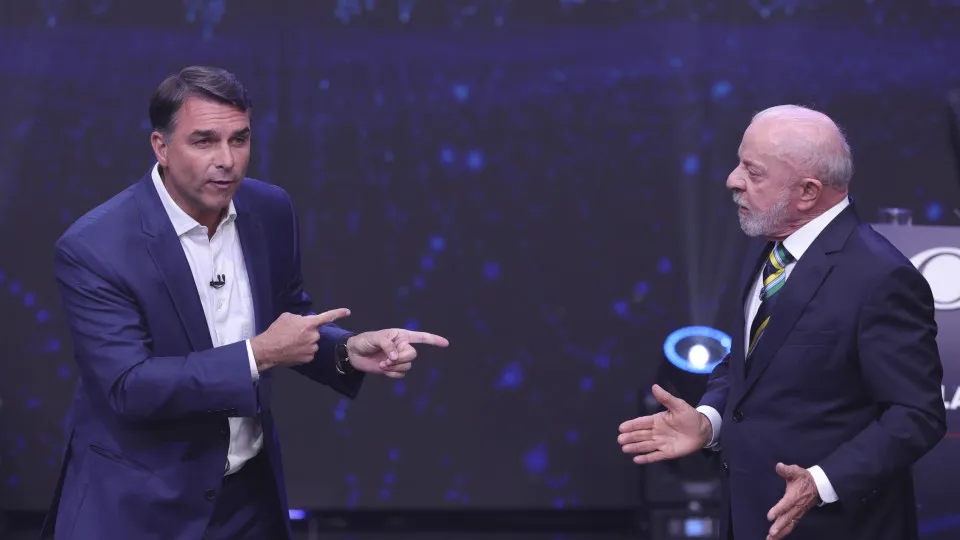
The candidates for the Brazilian presidency Lula da Silva and Flávio Bolsonaro today concentrate campaign actions in the largest electoral circles in the country, in an attempt to win votes on the eve of the second round of elections.
© Lusa
24/10/2026
by
Lusa
Ocandidates for the Brazilian presidency Lula da Silva and Flávio Bolsonaro today concentrate campaign actions in the largest electoral circles in the country, in an attempt to win votes on the eve of the second round of elections.
From Copacabana to Avenida Paulista, Lula da Silva now travels two of the country's most emblematic stages to close the campaign, the first and third largest Brazilian electoral colleges, with 34.1 million and 12.9 million voters, respectively.
In the morning, he walks with his supporters next to the world's most famous beach and in the afternoon goes to the heart of São Paulo, the largest city in Latin America and the country's financial center, in a last attempt to turn the strength of the streets into votes.
Flavio Bolsonaro, who goes ahead after winning the first lap with about two more percentage points than Lula, starts this morning in the state that has hit the presidential winner since 1989 and ends in the family's political cradle.
In Belo Horizonte, capital of the state of Minas Gerais, which is the second largest electoral college in the country with 16.4 million voters, the Liberal Party candidate holds a parade of motorcycles between the Pope's Square and the Freedom Square.
In the afternoon, he goes to the west of the ‘wonderful city’, to participate in a caravan in Barra da Tijuca to the house where his father, former President Jair Bolsonaro, lived.
Lula da Silva's campaign in the second round was marked by a strong mobilization on social networks, streets, demonstrations called by artists and initiatives of students and social movements to win votes and combat abstention.
After the disadvantage in the first round, he bet on defending democracy and its social legacy, intensified attacks on the opponent and announced economic and labour measures to seek to reverse the outcome.
Flávio Bolsonaro combined demonstrations of strength in the streets, with a bet on social networks, mobilizing digital influencers and figures such as Mr Nikolas Ferreira to expand the reach of the campaign.
He also received the support of defeated candidates in the first round, such as Ronaldo Caiado, Romeo Zema and Augusto Cury, who added 5.34% of the valid votes, as well as former President Michel Temer and the country's main central parties.
The dispute extended to digital platforms, with Lula's campaign accusing the Meta, owner of Facebook, Instagram and WhatsApp, of favoring Flávio Bolsonaro and resorting to the Superior Electoral Court to require equal treatment between applications, denouncing accounting restrictions, removing content and failures in artificial intelligence tools.
In the first round, held on October 4, Flávio Bolsonaro obtained 47.03% of the valid votes, against 45.16% of Lula da Silva, an advantage of 2.224,965 votes, and since the introduction of the system of two rounds in the Brazilian presidential, in 1989, no candidate who finished the first vote in second place managed to win the election.