
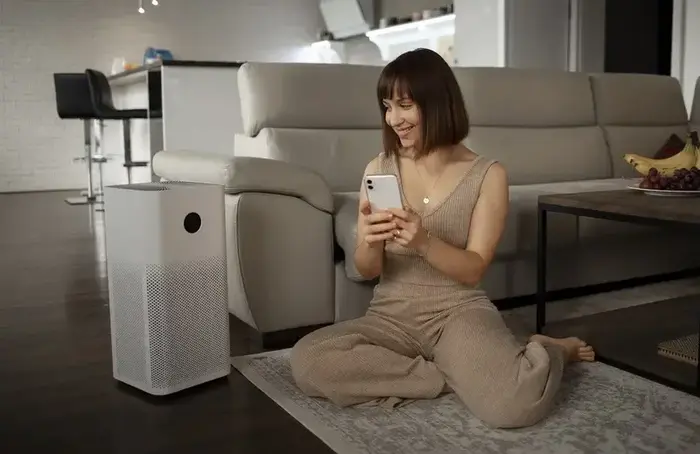
If you are concerned about the quality of the air you breathe in your home or office, you have probably heard about air purifiers. But do you know exactly what an air purifier is for and how it works? Let's explain everything you need to know about this device, its health benefits and some of the devices you can buy.
What's an air purifier?
An air purifier is a device that removes impurities, particles and odors from the air, improving the quality of the air we breathe. It is especially useful for people suffering from allergies, asthma or other respiratory conditions. In addition, it is an effective solution for those living or working in areas with a lot of pollution.
How does an air purifier work?
Air purifiers work in different ways depending on the model. Some use filters to remove particles and impurities from the air, while others use ionization technology to attract particles and eliminate them. Some air purifiers also use photocatalysis to eliminate odors and bacteria.
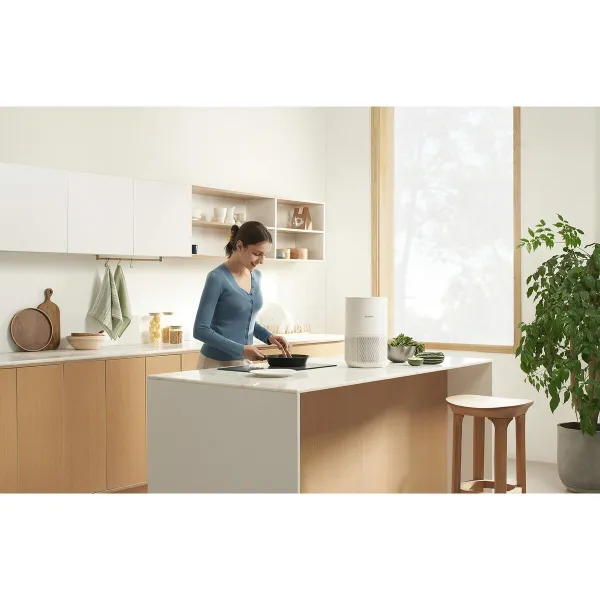
What are the health benefits?
An air purifier can bring many health benefits, especially for people suffering from allergies or respiratory problems. Because by removing particles such as dust, pollen, smoke and mites, it helps reduce the symptoms of allergies and asthma, such as sneezing, flushing, and shortness of breath. In addition, an air purifier can also help prevent respiratory diseases such as bronchitis and pneumonia.
How to choose an air purifier?
When choosing an air purifier, it is important to consider some factors, such as the size of the environment where it will be used, filter efficiency, noise level and energy consumption. For the best results, it is important to choose a model that meets your specific needs.
What's the difference between an air purifier and a humidifier?
While an air purifier removes impurities and particles from the air, a humidifier adds moisture to the air, thus helping to fight the dryness of the airways. Both devices improved air quality in indoor environments, depending on the specific needs of each person.
You can use both in your house. In addition, some humidifier models allow the use of aromas. It's the aroma diffusers.
Air Purifier Types
There are many types available, but the most used are HEPA filter, coal and even ozonizers. They help remove pollutants from the air, including pollen, dust, mites, smoke, odors and even viruses and bacteria. However, there are many types of air purifiers in the market, each with its own characteristics and advantages. See some of the different types of air purifiers available to help you choose the best for your needs.
1. Air Purifiers with filter HEPA
Air Purifiers with hEPA filter are the most popular in the market. This is because they use a high efficiency filter (HEPA) to capture particles in the air. These filters can capture particles as small as 0.3 micrometers, which means that they can remove up to 99.97% of air pollutants.
These filters are therefore highly recommended, and are also used in some quality appliances such as vacuum cleaners. To learn more you can click the above link on HEPA filters.
1.1 True HEPA filters
There are two types of HEPA filters: true and false. True HEPA filters are the most efficient and certified by the U.S. Department of Energy (DOE) to remove at least 99.97% of air particles.
1.2 Fake HEPA filters
Fake HEPA filters are filters that do not meet the DEO efficiency standards. That means they may not filter all the air particles.
2. Air Purifiers with ioniser
Air purifiers with ionizers work by generating negative ions that bind to particles in the air. The negatively charged particles bind to nearby surfaces and are removed from the air. However, ionising air purifiers can produce ozone, which is an air pollutant. It is important to choose an ioniser air purifier that produces low ozone levels.
For example, some evaporative air conditioners already come with various advanced technologies. Because in addition to filtering the air are also used with alternative to air conditioning.
3. Air Purifiers with activated carbon filter
Air purifiers with activated carbon filter remove odors and gases from the air. Activated carbon is a porous material that can absorb gaseous pollutants such as formaldehyde and volatile organic compounds (VOCs).
4. UV Air Purifiers
UV air purifiers use ultraviolet light to kill viruses and bacteria in the air. UV air purifiers are effective in eliminating microbes, but do not remove particles from the air.
Because UV radiation eliminates all microbial beings by making a deep disinfection. However, care must be taken to connect them in the absence of people, animals and plants. Once turned off, you can then use the areas where you used it safely. The germicidal lamp is just one example.
If you want to know more about these devices please refer to our article “What is UV Disinfection and Germicide Lamp“.
5. Air Purifiers with plasma technology
Air purifiers with plasma technology use an electrical discharge to ionize air. The generated ions bind to particles in the air, making them easier to capture by the filter.
6. Ozone air purifiers
Ozone air purifiers generate ozone to purify air. However, ozone is an air pollutant that can be harmful to human health, especially at high concentrations. So when using an ozone purifier, you must do so in the absence of people and animals. At least the most powerful models.
7. Air Purifiers with electronic filtering system
Air purifiers with electronic filtering system use a filtering system that uses an electrical charge to attract particles in the air. The particles are then captured in an electronic filter. This type of air purifier is effective in removing particles from the air.
8. Air Purifiers with Photocatalysis Technology
Air purifiers with photocatalysis technology use a chemical reaction to decompose pollutants in the air. The air purifier contains a photocatalytic material that is activated by UV light. When UV light hits the material, it begins to decompose pollutants in the air into harmless substances.
9. Air Purifiers with ion exchange system
Air purifiers with ion exchange system use an ion exchange resin to remove pollutants from the air. The air passes through a chamber containing a resin that exchanges ions with particles in the air. The particles are then captured by the resin.
10. Air Purifiers with molecular diffusion technology
Air purifiers with molecular diffusion technology use an adsorption process to remove pollutants from the air. The air purifier contains an adsorbent material that is activated by UV light. When UV light hits the material, it starts adsorbing pollutants in the air.
11. Air Purifiers with Electronic Board Technology
These use electronic plate technology. Yeah, that plate is loaded and captures particles in the air.
12. Air Purifiers with LED Light Technology
Air purifiers with LED light technology use LED light to kill microbes in the air. LED light is a cold light source that can be used to kill microbes without emitting ozone.
13. Air Purifiers with photochemical oxidation technology
These use a photochemical oxidation technology that uses a chemical reaction to decompose pollutants in the air. The air purifier contains a material that reacts with UV light to produce hydroxyl radicals, which are highly reactive and can decompose pollutants in the air.
14. Air Purifiers with Adsorption Technology
Air purifiers with adsorption technology use adsorbent material to remove pollutants from the air.
Which Purifier should I choose?
You can choose a purifier that uses multiple technologies simultaneously. Yes, there are today models that use for example HEPA filters and activated carbon. In addition, you can supplement your HEPA purifier with the ozone generator, as both allow for air cleaning and deeper disinfection.
Conclusion
Investing in an air purifier can bring several health benefits, especially for people suffering from allergies or respiratory problems. By choosing an efficient model and using it correctly, it is possible to improve the quality of the air we breathe and prevent respiratory diseases. You can now see some more appliances, or consult our section home. Yeah, here you can find these and other models.