
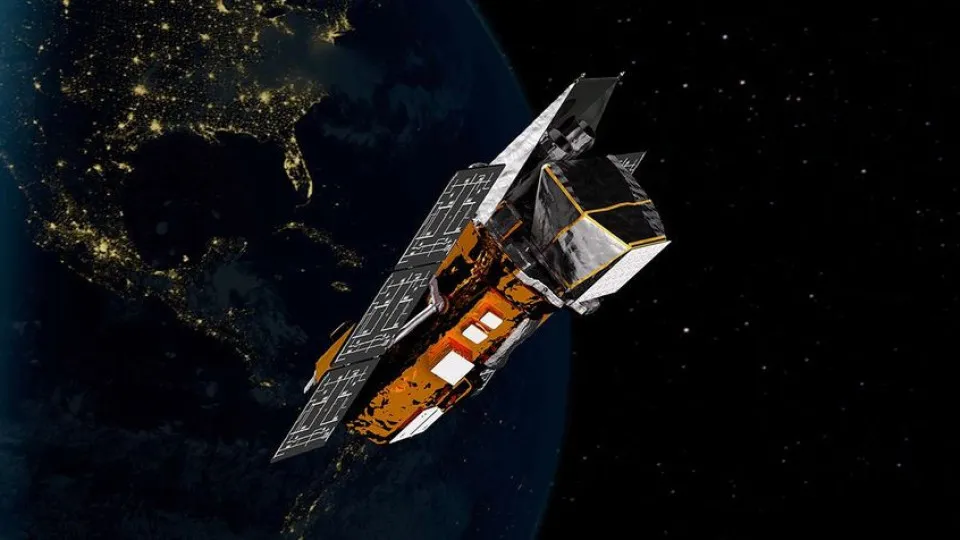
NASA's Swift space telescope will reenter the Earth's atmosphere in the coming weeks after completing 22 years of scientific mission. The satellite, which revolutionized the study of gamma ray explosions and cosmic events, was forced to terminate the mission due to increased atmospheric drag.
© NASA
26/10/2026
by
News to Minutes
O swift space telescope is expected to reenter the Earth's atmosphere in the coming weeks, after NASA's Neil Gehrels Swift observatory has completed its scientific mission after 22 years.
The observatory, which revolutionized the study of gamma ray explosions and other high-energy cosmic events, was forced to close after increased atmospheric drag caused a rapid loss of altitude.
The Swift satellite made the last observation on October 20, when it orbited less than 275 kilometers from the Earth's surface.
The prediction is that it will reenter the atmosphere in the coming weeks.
“Swift provided a return on the incredible and lasting investment for the nation, initially designed for a two-year mission, but productive for 10 times more than that period,” said Shawn Domagal-Goldman, director of the NASA headquarters Astrophysics Division in Washington. “During this period, Swift played a key role in advancing our understanding of the constantly changing universe and was part of a revolution in astrophysics that demonstrated the crucial importance of rapid response observations for the entire community.”
To help “the rapid response to cosmic events in a post-Swift world, we are exploring our ability to use and expand NASA’s existing space telescope fleet from fast-to-orbit commercial capabilities to new efficient and innovative missions,” added Shawn Domagal-Goldman.
During its trajectory, Swift, launched in November 2004, observed over 2,000 gamma ray explosions, the most powerful explosions in the cosmos. In addition, he studied more than 1,400 supernova explosions, witnessed stars being shattered by black holes, accompanied active galaxies, carried out an X-ray survey from all over the sky, studied asteroids and comets, etc. Swift data contributed to about 7,000 scientific articles already published.